
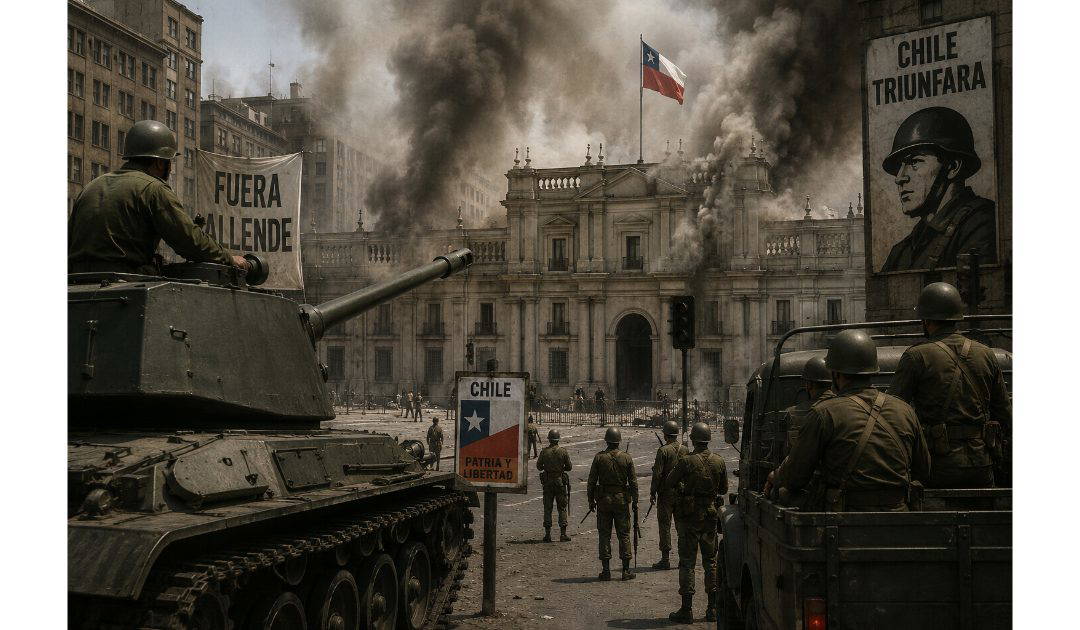
On the 11th of September, 1973, a coup led by General Augusto Pinochet replaced the government of Salvadore Allende in Chile. We visited Chile in 2019 and loved the country and the people, but you could still sense the relief that the democracy that returned in 1990 remained.
Salvador Allende (1908–1973) was a Chilean physician and politician who became the first Marxist to be democratically elected as president of a Latin American country. He served as President of Chile from 1970 until his death during the military coup of 11 September 1973.
Born in Valparaíso, Allende studied medicine at the University of Chile, where he became involved in left-wing politics. He was a founding member of the Chilean Socialist Party in 1933 and spent decades serving as a deputy, senator and cabinet minister. After unsuccessfully contesting the presidency three times, he won the 1970 election at the head of the Popular Unity coalition.
As president, Allende sought to create a peaceful transition to socialism through democratic means. His government nationalised major industries, including Chile’s copper mines, expanded land reform, increased wages and improved access to education and healthcare. These policies were popular with many working-class Chileans but alarmed conservative groups, business interests and sections of the middle class. The United States, concerned about the spread of Marxism during the Cold War, opposed his government and supported efforts to destabilise it economically and politically.
By 1973, Chile was experiencing severe economic difficulties, including soaring inflation, shortages of consumer goods and widespread strikes. Political divisions became increasingly bitter, with supporters arguing that Allende was defending democracy and opponents accusing him of undermining Chile’s constitutional order.
On the 11th of September 1973, the Chilean armed forces, led by General Augusto Pinochet, overthrew Allende’s government. As troops attacked the presidential palace, La Moneda, Allende refused to surrender. According to the official investigation and the broad consensus of historians and forensic experts, he died by suicide using a rifle that had been presented to him by Fidel Castro.
Allende’s overthrow marked the beginning of Pinochet’s military dictatorship, which lasted until 1990. Today, Salvador Allende remains a deeply significant and contested historical figure. To supporters, he symbolises democracy, social justice and resistance to tyranny; to critics, his economic policies and political leadership contributed to the crisis that preceded the military coup.
I recall the outrage during the Falklands Conflict, that the UK should be accepting assistance from Pinochet’s Chile. Well while we were in Chile our guide told us that the Argentinians were constantly trying to steal their islands too.