
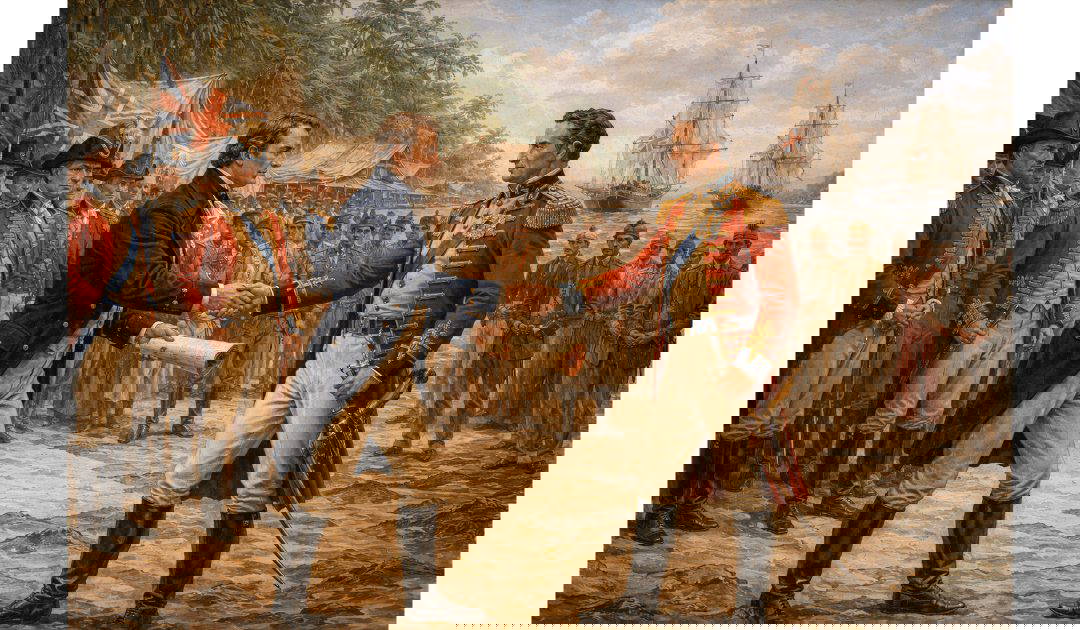
I posted yesterday about Singapore. It seems to me that Raffles gets rather too much credit in Singapore’s story, because the day after signing the treaty, Raffles took his leave and left Singapore in the hands of William Farquhar.
William Farquhar (1774–1839) was a Scottish soldier, administrator, and colonial official whose career spanned the formative years of British expansion in Southeast Asia. Although frequently eclipsed in popular memory by Sir Thomas Stamford Raffles, Farquhar played a crucial practical role in the establishment and early survival of Singapore as a British settlement. His administrative skills, diplomatic sensitivity, and long experience in the region made him indispensable during the colony’s precarious first years.
Born in Scotland in 1774, Farquhar joined the British military at a young age and entered the service of the British East India Company, which at the time functioned as both a commercial enterprise and a governing authority across much of Asia. He was posted early in his career to Malaya, where he developed a deep familiarity with local cultures, languages, and political structures. This regional knowledge would later distinguish him from many contemporaries who arrived in Southeast Asia with little understanding of its complex social fabric.
Farquhar first rose to prominence as Resident of Malacca, a post he assumed after the British temporarily took control of the former Dutch settlement during the Napoleonic Wars. As Resident, Farquhar demonstrated an unusually pragmatic and humane approach to governance. He cultivated relationships with local Malay rulers and Chinese community leaders, encouraged trade, and resisted harsh colonial regulations that might destabilise society. His policies fostered relative prosperity and stability, earning him respect among local populations, though sometimes placing him at odds with stricter colonial authorities.
In 1819, Farquhar’s career reached its most historically significant moment with the founding of Singapore. When Sir Stamford Raffles arrived in January of that year seeking a strategic port to counter Dutch influence, Farquhar’s regional experience proved invaluable. He assisted Raffles in negotiating with Sultan Hussein Shah of Johor and the Temenggong, facilitating the treaty that allowed the British to establish a settlement on the island. While Raffles provided the vision and political drive, Farquhar supplied the local knowledge and administrative continuity necessary to make the project viable.
On the 7th of February, 1819, Raffles formally appointed Farquhar as Resident and Commandant of Singapore before departing for Bencoolen. From that moment, Farquhar bore responsibility for governing what was, at the time, little more than a swampy island with a small population and minimal infrastructure. His tenure as Singapore’s first Resident lasted until 1823 and was marked by extraordinary challenges. The settlement grew at a breathtaking pace, attracting traders, migrants, adventurers, and fortune-seekers from across Asia.
Farquhar governed Singapore with a light administrative touch. He allowed free trade to flourish, tolerated informal settlements, and relied on cooperation with local leaders rather than rigid enforcement of British law. This approach helped transform Singapore rapidly into a thriving commercial hub, but it also drew criticism from Raffles, who believed Farquhar’s methods were too permissive and insufficiently moral. Raffles disapproved particularly of Farquhar’s tolerance of gambling, cockfighting, and slavery, which he regarded as incompatible with his vision of an orderly, reformist colony.
Tensions between the two men grew steadily. When Raffles returned to Singapore in 1822, he was alarmed by what he perceived as administrative laxity and social disorder. In 1823, Farquhar was removed from office and replaced, a decision that deeply embittered him. Despite his foundational role, Farquhar received little official recognition for his work in building Singapore during its most vulnerable period.
After leaving Singapore, Farquhar returned briefly to Malacca but found his career in decline. He spent his later years in relative obscurity, eventually returning to Britain. One of his lasting legacies is his extraordinary collection of natural history drawings, commissioned during his time in Southeast Asia. These illustrations of flora, fauna, and local life — created by Chinese artists under his patronage — remain an invaluable record of early nineteenth-century Singapore and Malaya and are now held in the National Museum of Scotland.
William Farquhar died in 1839, largely forgotten by the imperial establishment he had served. Yet modern historians increasingly recognise that without Farquhar’s steady leadership, cultural sensitivity, and administrative pragmatism, Singapore might not have survived its earliest years. If Raffles was the visionary founder, Farquhar was the practical builder — the man who turned an idea into a functioning settlement.