
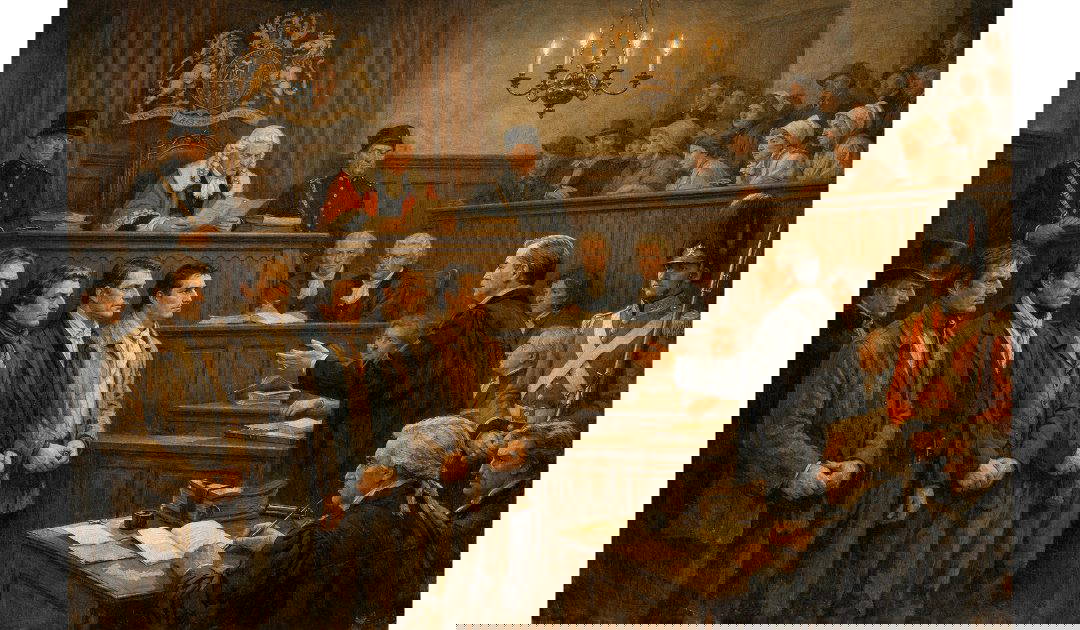
I can’t believe that I haven’t posted about the Tolpuddle Martryrs before. When we kept our boat in Portland we often visited Tolpuddle and Dorchester Museum. So, here we go. On the 18th of March, 1834, six farm labourers from Tolpuddle, Dorset, were sentenced to be transported to Australia, essentially (we’ll come to that) for forming a trade union. I have recently posted about the Labour Party. I think it is through miscarriages of justice like this that the rise of the Trade Union movement and the formation of the Labour Party became inevitable.
The Tolpuddle Martyrs were six agricultural labourers from the Dorset village of Tolpuddle who, in 1834, became symbols of the struggle for workers’ rights, trade unionism, and social justice in Britain. Their prosecution, conviction, and transportation to Australia for the simple act of forming a friendly society to protect their wages shocked the nation and helped galvanise the early trade union movement.
The six men were George Loveless, James Loveless (his brother), Thomas Standfield, John Standfield (his son), James Hammett, and James Brine. They lived and worked in Tolpuddle, a small rural parish where most families depended on agricultural labour for survival. Conditions for farm workers in early nineteenth-century England were harsh. Wages had been falling for years, especially after the end of the Napoleonic Wars in 1815, while the price of food and basic goods remained high. Many labourers lived in extreme poverty, reliant on parish relief to survive.
By the early 1830s, agricultural wages in Dorset had dropped to as little as seven shillings a week. This was barely enough to feed a family. Labourers had little bargaining power. Landowners and farmers could easily replace anyone who complained. Attempts to protest often led to dismissal, blacklisting, or eviction from tied cottages. Memories of the Swing Riots of 1830—when rural workers destroyed threshing machines and protested against low pay—were still fresh, and the authorities were determined to prevent further unrest.
George Loveless, a Methodist preacher as well as a labourer, was a thoughtful and literate man who believed strongly in fairness and mutual support. Influenced by the growth of trade unionism in towns and cities, he and his fellow workers decided to form a Friendly Society of Agricultural Labourers in 1833. Their aim was simple: to agree among themselves not to work for less than ten shillings a week.
At the time, trade unions were not strictly illegal. The Combination Acts, which had banned unions, had been repealed in 1824–25. However, the authorities remained deeply suspicious of organised labour, particularly in the countryside. To give their society a sense of seriousness and commitment, the Tolpuddle men adopted a form of oath, swearing secrecy and loyalty to one another. Such oaths were common in friendly societies, which were mutual aid organisations providing help in times of sickness or hardship.
Unfortunately for the Tolpuddle labourers, the authorities saw an opportunity to make an example of them. Rather than charging them directly for union activity—which might have been legally questionable—the local magistrates invoked an obscure law: the Unlawful Oaths Act of 1797. This Act had been passed in the aftermath of naval mutinies and fears of revolutionary conspiracy, and it made the administering of secret oaths a serious offence.
In February 1834, the six men were arrested and brought before the magistrates in Dorchester. Their trial took place in March before Mr Justice Baron John Williams. The prosecution focused not on their demands for better wages, but on the fact that they had sworn a secret oath. Despite the defence arguing that this was part of a friendly society and not a seditious conspiracy, the jury found them guilty.
The sentence was shockingly harsh: transportation for seven years to Australia. Transportation was usually reserved for serious criminals. For many, it was effectively a life sentence, separating men from their families and communities with little hope of return.
News of the sentence spread quickly and caused outrage across the country. Many people felt the punishment was wildly disproportionate and politically motivated. Trade unionists, reformers, and ordinary citizens rallied to the men’s cause. In London, a massive demonstration was held in April 1834, attended by tens of thousands of people—one of the first great mass protests of the labour movement. Petitions for their release gathered hundreds of thousands of signatures.
Meanwhile, the six men were transported to penal colonies in Australia. George Loveless was sent to Van Diemen’s Land (Tasmania), where conditions were harsh but he continued to write letters and keep a record of his experiences. The others were dispersed to different locations in New South Wales and Tasmania, working as convict labourers.
The public campaign on their behalf did not fade. The newly formed Grand National Consolidated Trades Union took up their cause, and sympathetic Members of Parliament pressed for a review of the case. The government, uneasy about the growing unrest, eventually relented.
In 1836, after two years in exile, the Tolpuddle Martyrs were granted conditional pardons. They were allowed to return to England, although the journey home was long and difficult. By 1839, all six had been reunited with their families in Dorset.
Their return was celebrated as a victory for justice and for the rights of working people. Although they did not immediately achieve lasting improvements in agricultural wages, their case had a profound symbolic impact. It demonstrated the willingness of the authorities to suppress workers’ organisation and, equally, the power of public opinion and collective protest to challenge injustice.
In later years, several of the men emigrated again, this time voluntarily, to Canada in search of better opportunities. George Loveless lived until 1874, long enough to see the growth of the trade union movement that he had helped to inspire.
Today, the Tolpuddle Martyrs are remembered as pioneers of trade unionism and defenders of workers’ rights. A museum in Tolpuddle and an annual festival commemorate their story. Their experience highlighted the desperate conditions of rural labourers and helped lay the foundations for the recognition of the right to organise—a principle now central to modern labour law.
The Tolpuddle Martyrs’ legacy lies not in what they achieved for themselves, but in what their suffering achieved for generations of workers who followed.