
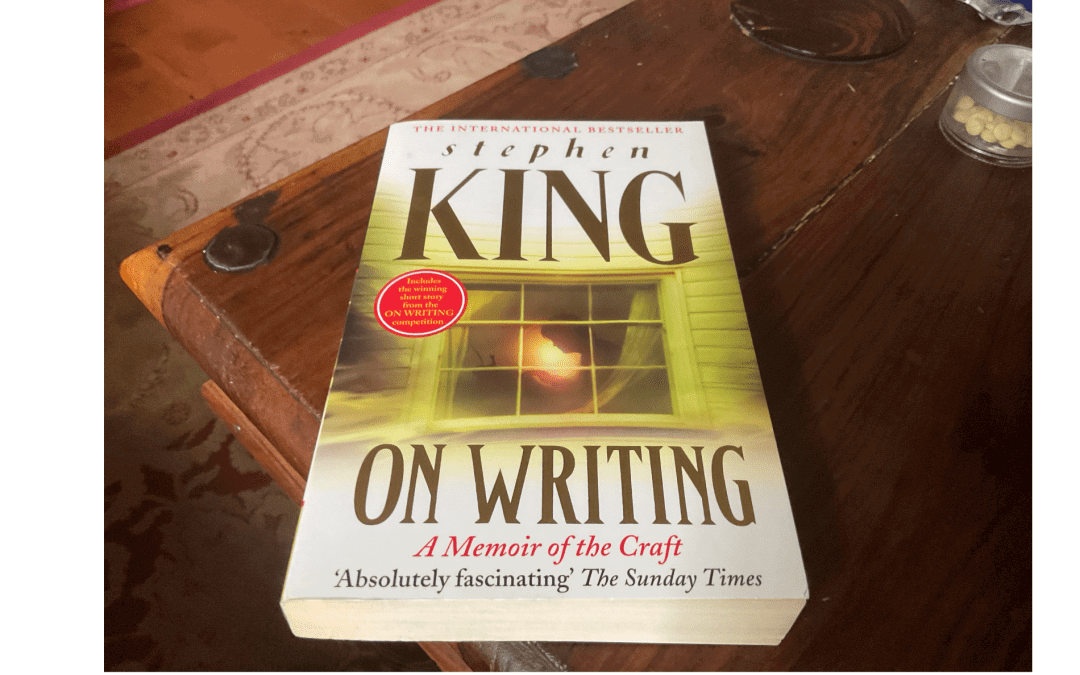
On the 5th of April, 1974, Carrie, the first novel by Stephen King, was published for the first time with a print run of 30,000 copies. I have to confess that the only Stephen King books I have read so far are On Writing, which is brilliantly written, and supremely educational to a writer, and Christine which is terrifyingly haunting.
Stephen King is one of the most widely read and commercially successful authors in modern literature, a writer whose name has become almost synonymous with horror, suspense, and the supernatural. Born on the 21st of September, 1947, in Portland, Maine, King grew up in modest circumstances that would later shape both his worldview and his fiction. His father, a merchant seaman, abandoned the family when King was two years old, leaving his mother, Nellie Ruth Pillsbury King, to raise Stephen and his older brother alone. Much of King’s childhood was spent moving between relatives’ homes in Maine and Indiana, an unsettled upbringing that fed his imagination and gave him a keen awareness of small-town life—settings that would later dominate his stories.
From an early age, King showed a fascination with storytelling. He devoured comic books, horror films, and science fiction magazines, and began writing his own tales as a child. After visibly enjoying the lurid thrills of EC Comics and low-budget monster movies, he started to shape similar narratives of his own, typing stories on a portable typewriter and selling them to friends for a few cents. This youthful enthusiasm for the macabre never left him, though it matured into a deeper interest in the psychology of fear and the hidden darkness beneath everyday life.
King attended the University of Maine, graduating in 1970 with a degree in English. While at university he wrote for the student newspaper and met Tabitha Spruce, a fellow student who would later become his wife and an important influence on his career. After graduation, King struggled financially. He worked as a high school English teacher, took on odd jobs, and wrote short stories in his spare time, selling some to men’s magazines for small sums. During this period, he and Tabitha lived in a trailer and faced persistent money problems, experiences that later informed his sympathetic portrayals of working-class characters.
His breakthrough came with the novel Carrie. Initially discouraged, King threw the early draft into the bin, but Tabitha retrieved it and urged him to finish it. Published in 1974, Carrie—the story of a bullied teenage girl with telekinetic powers—became an unexpected success. The paperback rights sold for a substantial sum, allowing King to leave teaching and write full time. Almost overnight, he moved from near poverty to financial security.
The years that followed were extraordinarily productive. King published a string of novels that quickly became bestsellers: ’Salem’s Lot (1975), The Shining (1977), The Stand (1978), and The Dead Zone (1979). These books established his reputation for blending supernatural horror with deeply drawn characters and recognisable American settings. Unlike many horror writers, King grounded his stories in the familiar world of small towns, domestic life, and ordinary people. The terror, when it came, erupted into an otherwise believable reality.
A hallmark of King’s writing is his attention to character and community. Towns such as Castle Rock, Derry, and Jerusalem’s Lot recur throughout his work, forming an interconnected fictional geography. His characters are often flawed, relatable people: teachers, children, writers, shopkeepers, and labourers. Through them, King explores themes of childhood trauma, addiction, grief, and moral choice. Fear in his stories is rarely just about monsters; it is about what people are capable of, and what lies buried in memory and conscience.
King has also written extensively outside the strict horror genre. Novels such as The Shawshank Redemption, The Green Mile, and Stand by Me (originally The Body) are more accurately described as dramas or coming-of-age stories, yet they retain the tension and emotional intensity that characterise his style. He has published under the pseudonym Richard Bachman to test whether his success was due to talent or brand recognition; the books sold modestly until the pseudonym was exposed.
Throughout his career, King has been remarkably candid about his struggles with addiction. In the late 1970s and 1980s, he battled alcoholism and substance abuse, problems that affected his family life and nearly derailed his career. He later achieved sobriety, and these experiences informed works like The Shining and Doctor Sleep, in which addiction plays a central role.
In 1999, King was seriously injured when he was struck by a van while walking near his home in Maine. The accident left him with multiple fractures and a long, painful recovery. For a time, he considered retiring from writing, but eventually returned to work, demonstrating the resilience that has marked his life.
Over the decades, King has published more than sixty novels and hundreds of short stories, many adapted into successful films and television series. His work has earned numerous awards, including the National Book Foundation’s Medal for Distinguished Contribution to American Letters. Despite his fame, he remains closely associated with Maine and often writes about its landscapes and communities.
Stephen King’s enduring appeal lies in his ability to tap into universal fears while telling intensely human stories. He combines the traditions of Gothic horror with modern realism, creating narratives that are both terrifying and emotionally resonant. Few writers have shaped popular fiction so profoundly, and fewer still have done so with such consistency and breadth.