
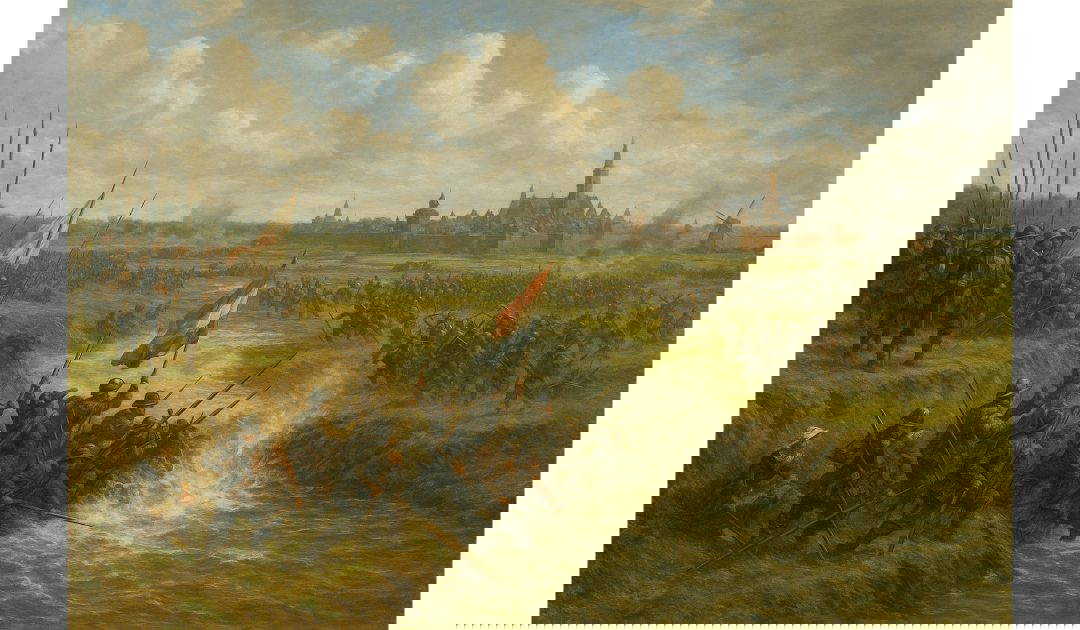
My choice of historical event for the 8th of October is the Siege of Alkmaar, which began on the 21st of August 1573. It was as a pivotal event in the Eighty Years’ War, marking the first decisive defeat of the Spanish forces by the Dutch rebels. This victory not only boosted the morale of the burgeoning Dutch resistance but also symbolised a turning point in their struggle for independence from Spanish rule.
The Eighty Years’ War, beginning in 1568, was a protracted conflict between the Spanish Empire and the rebellious provinces of the Low Countries. Under the harsh rule of the Duke of Alba, the Spanish sought to suppress Protestantism and reinforce their political control. The imposition of heavy taxes and religious persecution inflamed resistance across the Netherlands. My ancestor, Sir Anthony Standen, was a spy working for Francis Walsingham in the Low Countries during the period. I tell his story in The Spy who Sank the Armada, the first book in the Sir Anthony Standen Adventures.
Following the fall of Haarlem earlier in 1573, the Spanish aimed to crush further rebellion by capturing Alkmaar. Holding strategic importance due to its location in North Holland and its defences bolstered by surrounding polders and canals, Alkmaar became the next target for Don Fadrique Álvarez de Toledo, the son of the Duke of Alba.
On the 21st of August, 1573, Spanish forces, numbering around 6,500 soldiers, laid siege to Alkmaar. The defenders, under the leadership of Jacob Cabeliau, comprised roughly 1,300 soldiers and armed townsfolk. Despite being outnumbered, the citizens of Alkmaar were determined, employing innovative defensive tactics and leveraging their knowledge of the local terrain.
The Spanish initially attempted to breach Alkmaar’s defences through conventional siege tactics, including bombardment and constructing siege works. However, the resilience of the defenders frustrated these efforts. The people of Alkmaar utilised boiling tar, burning branches, and even pouring hot oil to repel assaults, demonstrating remarkable resourcefulness.
One of the most critical factors in Alkmaar’s defence was the strategic use of water. The Dutch rebels, known as the Watergeuzen or “Sea Beggars,” had already proven adept at using flooding as a defensive measure. Recognising the Spanish vulnerability to such tactics, the defenders of Alkmaar coordinated with William of Orange to flood the surrounding polders. By breaching dykes and opening sluices, the land around Alkmaar was deliberately inundated. This not only hampered Spanish siege operations but also made their encampments untenable. The flooding turned the siege into a logistical nightmare for the Spanish, as their supplies dwindled and disease spread amidst the marshy conditions.
As the waters rose, the Spanish forces found themselves trapped between the flooded polders and the unyielding defences of Alkmaar. Morale among the Spanish troops plummeted due to the harsh conditions, lack of supplies, and continuous harassment by Dutch forces navigating the waters with small boats.
Realising the futility of the siege under these dire circumstances, Don Fadrique decided to withdraw his forces. On the 8th of October, 1573, the Spanish lifted the siege and retreated, marking the first significant victory for the Dutch rebels in the Eighty Years’ War.
The successful defence of Alkmaar had profound implications. It demonstrated that the Spanish army, previously considered invincible, could be defeated. The victory galvanised the Dutch resistance, inspiring other towns to rise against Spanish rule.
Furthermore, the siege highlighted the effectiveness of the Dutch reliance on water as a defensive weapon, a strategy that would be employed repeatedly throughout the conflict. The phrase “Victory begins at Alkmaar” became emblematic of Dutch resilience and ingenuity.
From a broader perspective, the Siege of Alkmaar contributed to the gradual erosion of Spanish dominance in the Low Countries. It emboldened the States-General to continue their fight for autonomy, eventually leading to the formal recognition of Dutch independence with the Treaty of Westphalia in 1648.
Today, Alkmaar commemorates its historical victory with annual celebrations on the 8th of October, known as “Alkmaar Ontzet.” The city’s museums and monuments serve as enduring reminders of the courage and determination displayed during the siege.