
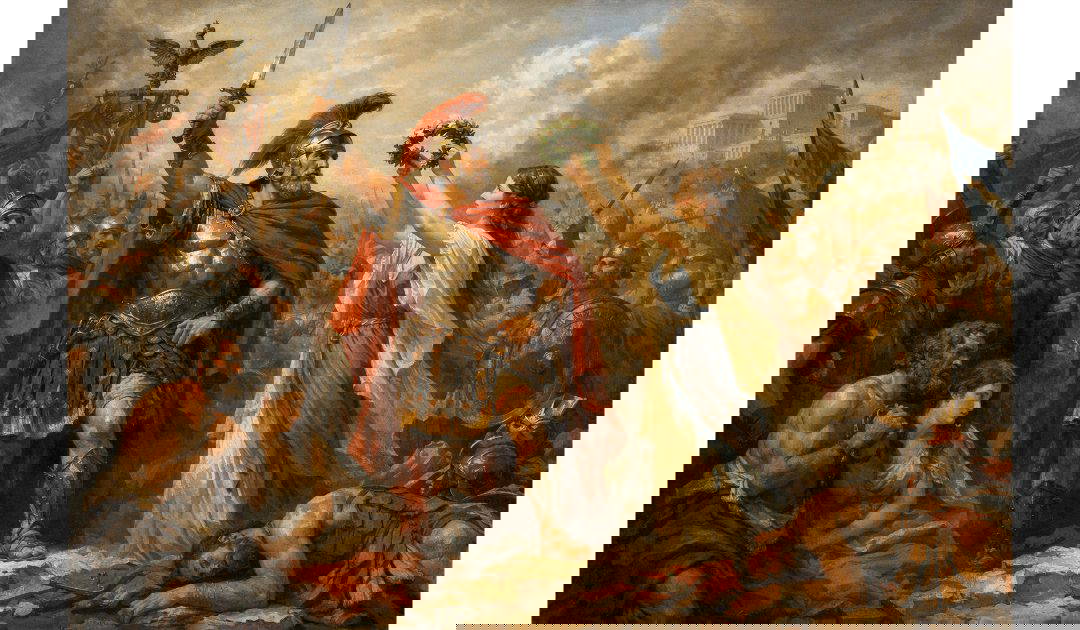
On the 4th of April, 503BC, the Roman consul Agrippa Menenius Lanatus celebrated a triumph for a military victory over the Sabines. Agrippa Menenius Lanatus belongs to the half-legendary generation of early Roman leaders whose deeds sit on the border between history and patriotic tradition. He was consul of the young Roman Republic in 503 BC, only a few years after the expulsion of the kings, at a time when Rome’s very survival was uncertain. The city was surrounded by hostile or suspicious neighbours, among them the Sabines, a hardy people of the Apennine hills whose earlier conflict with Rome had already entered legend in the story of the “Rape of the Sabine Women.” By the early fifth century BC, relations had again deteriorated into open warfare.
Our main source for these events is Livy, writing five centuries later, drawing on earlier annalists whose records mixed oral tradition with sparse documentation. Even allowing for embellishment, the outline of the conflict reflects a real pattern of early Roman warfare: seasonal campaigns, raids, counter-raids, and struggles for dominance over the central Italian uplands. In 503 BC, the Sabines mounted a serious incursion into Roman territory, perhaps encouraged by Rome’s recent political upheaval and the belief that the fledgling Republic was vulnerable.
The Romans elected two consuls for the year: Publius Postumius Tubertus and Agrippa Menenius Lanatus. While Postumius dealt with other threats, Menenius was tasked with confronting the Sabines. According to Livy, the Sabine army advanced boldly into Roman lands, confident of victory. Menenius, however, proved both energetic and disciplined. He gathered his forces quickly and moved to meet the invaders before they could disperse to plunder the countryside.
The battle that followed is described as hard-fought and decisive. Roman infantry, fighting in the tight formations that were becoming characteristic of their method of warfare, pressed back the Sabine lines. Menenius is portrayed as personally encouraging his men, moving along the ranks, restoring order when parts of the line wavered. Eventually the Sabine resistance collapsed. Many were slain, and the rest fled in disorder back towards their own territory, pursued by the Romans.
Menenius did not simply drive them from Roman soil. He carried the war into Sabine land, devastating fields and settlements in retaliation. This was a common practice in ancient warfare: destruction of crops and property was intended both to punish and to deter future aggression. The Sabines, faced with losses at home as well as defeat in battle, were compelled to sue for peace.
For this victory, Agrippa Menenius Lanatus was awarded one of the highest honours Rome could bestow: a triumph. Livy records that the Senate decreed him a triumph for his success over the Sabines. The triumph was not automatically granted to every victorious commander; it required Senate approval and was reserved for victories deemed especially significant. That Menenius received one indicates the importance Romans later attached to this campaign.
The Roman Triumph was far more than a parade. It was a deeply symbolic religious and political ceremony that expressed Rome’s values, beliefs, and social order. At its core, the triumph was a thanksgiving to Jupiter Optimus Maximus, the chief god of Rome, for granting victory. The victorious general, known as the triumphator, processed through the city in a chariot, dressed in a purple and gold robe traditionally associated with kings and with Jupiter himself. His face was often painted red with vermilion, echoing the cult statue of the god.
The procession followed a set route through Rome to the Temple of Jupiter on the Capitoline Hill. Along the way marched soldiers, musicians, and attendants carrying the spoils of war: captured weapons, treasure, works of art, and exotic items from the defeated enemy. Prisoners of rank were displayed, often destined for execution after the ceremony. Placards or displays might illustrate scenes from the campaign, turning the triumph into a visual narrative of conquest.
Behind the splendour lay a carefully balanced message. For one day, the general appeared almost godlike, elevated above ordinary citizens. Yet he was also reminded of his mortality. A slave stood behind him in the chariot, traditionally whispering, “Remember you are only a man.” This tension reflected Roman suspicion of excessive personal power. The triumph celebrated individual achievement while reaffirming that the victory ultimately belonged to Rome and to the gods.
The soldiers who had fought in the campaign followed their commander, chanting songs that were often bawdy or mocking. This element of rough humour further undercut any tendency towards arrogance. At the end of the procession, sacrifices were offered to Jupiter, and a public feast might be held. The triumph thus united religion, military success, political legitimacy, and popular celebration in a single event.
For early Rome, such ceremonies also served an important historical function. In a society with limited written records, the triumph publicly fixed a victory in collective memory. The name of the triumphator, the enemy defeated, and the year of the event were recorded in the official fasti, the lists of magistrates and triumphs that later historians consulted. Through this process, figures like Agrippa Menenius Lanatus passed from immediate military leaders into the semi-mythic roll call of Rome’s founders.
Menenius himself later became famous for another reason. He was credited with calming a social crisis between the patricians and plebeians by telling the fable of the belly and the limbs, illustrating the need for cooperation within the state. This association with wise counsel and civic harmony complements the image of him as a capable commander. In Roman memory, he embodied both martial strength and political wisdom.
His victory over the Sabines, whether embroidered by legend or not, represents the kind of hard, local warfare through which Rome slowly secured dominance over its neighbours. The triumph he received shows how Romans interpreted such victories: not merely as tactical successes, but as signs of divine favour and as building blocks in the story of Rome’s destined greatness.