

Roger Scott
On the 28th of February 1646 Roger Scott was tried for sleeping in church in Massachusetts. The trial of Roger Scott is a lesser-known but notable event from colonial America, particularly in Massachusetts Bay Colony. Scott was punished for “repeated sleeping in...

King Henry IV of France
On the 27th February 1594, Henry of Navarre was crowned at Chartres Cathedral. He is the only French monarch to have been crowned there, because Reims and Paris were occupied by the Catholic League. Henry of Navarre (1553 - 1610), later known as Henry IV of France,...
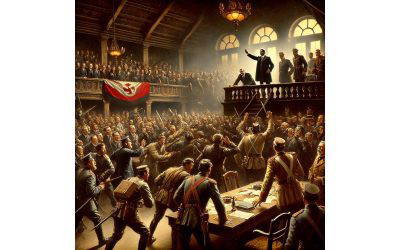
Beer Hall Putsch
On the 26th of February 1924 the trial of Adolf Hitler, for treason after the Beer Hall Putsch, began in Munich. The Beer Hall Putsch, also known as the Munich Putsch, was a failed coup attempt by Adolf Hitler and the Nazi Party (NSDAP) to overthrow the German...
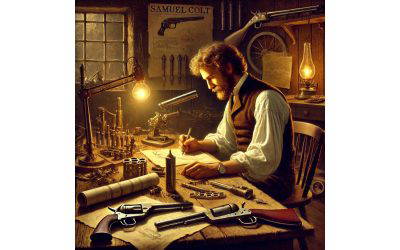
Samuel Colt
On the 25th of February, 1836 Samuel Colt patented his first revolver. Colt was born on the 19th of July, 1814, in Hartford, Connecticut. From a young age, he showed an interest in mechanics and chemistry. At 16, while working on a farm, he became fascinated by the...
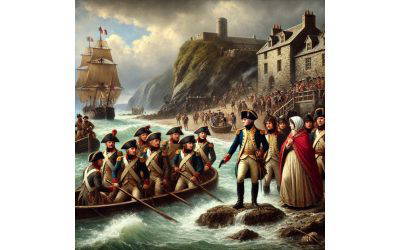
The Last Invasion of Britain
On the 24th of February 1797 a French invasion force, of between one and two thousand men, surrendered to Welsh women in tall black hats at Goodwick Sands near Fishguard. The French invasion at Goodwick Sands was the last time a foreign military force attempted to...
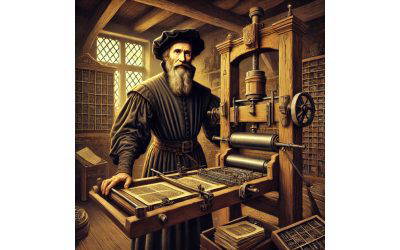
Gutenberg Bible
On This Day tells me that on the 23rd of February 1455 Johannes Gutenberg printed his first bible. It does add that this is an estimated date. Johannes Gutenberg (c. 1400 - 1468) was a German inventor and printer who developed the first practical method of printing...

Galileo
On the 22nd of February, 1632, Galileo’s “Dialogue Concerning the Two Chief World Systems” was published. I have posted about Galileo before, because he is a character in Fire and Earth, the second book in the Sir Anthony Standen Adventures. Galileo dedicated his book...
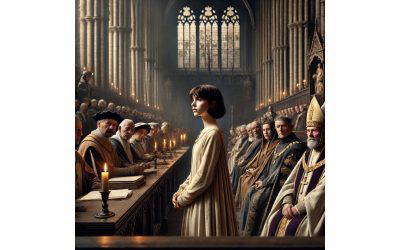
Joan of Arc
On the 21st of February 1431, the interrogation began in the trial of Joan of Arc for heresy. The trial of Joan of Arc (1412 - 1431) was a politically motivated inquisition orchestrated by the English and their allies during the Hundred Years’ War. Joan, a young...
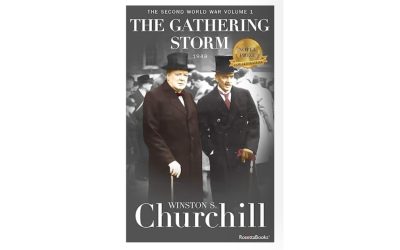
Anthony Eden and Memorable Writing
On the 20th of February 1938 Anthony Eden resigned as Foreign Secretary because of the appeasement policy of Neville Chamberlain’s government. As a writer I’m interested in what makes writing memorable. There is one page of writing that I have read once, and that must...
Roger Scott
On the 28th of February 1646 Roger Scott was tried for sleeping in church in Massachusetts. The trial of Roger Scott is a lesser-known but notable event from colonial America, particularly in Massachusetts Bay Colony. Scott was punished for “repeated sleeping in...
King Henry IV of France
On the 27th February 1594, Henry of Navarre was crowned at Chartres Cathedral. He is the only French monarch to have been crowned there, because Reims and Paris were occupied by the Catholic League. Henry of Navarre (1553 - 1610), later known as Henry IV of France,...
Beer Hall Putsch
On the 26th of February 1924 the trial of Adolf Hitler, for treason after the Beer Hall Putsch, began in Munich. The Beer Hall Putsch, also known as the Munich Putsch, was a failed coup attempt by Adolf Hitler and the Nazi Party (NSDAP) to overthrow the German...
Samuel Colt
On the 25th of February, 1836 Samuel Colt patented his first revolver. Colt was born on the 19th of July, 1814, in Hartford, Connecticut. From a young age, he showed an interest in mechanics and chemistry. At 16, while working on a farm, he became fascinated by the...
The Last Invasion of Britain
On the 24th of February 1797 a French invasion force, of between one and two thousand men, surrendered to Welsh women in tall black hats at Goodwick Sands near Fishguard. The French invasion at Goodwick Sands was the last time a foreign military force attempted to...
Gutenberg Bible
On This Day tells me that on the 23rd of February 1455 Johannes Gutenberg printed his first bible. It does add that this is an estimated date. Johannes Gutenberg (c. 1400 - 1468) was a German inventor and printer who developed the first practical method of printing...
Galileo
On the 22nd of February, 1632, Galileo’s “Dialogue Concerning the Two Chief World Systems” was published. I have posted about Galileo before, because he is a character in Fire and Earth, the second book in the Sir Anthony Standen Adventures. Galileo dedicated his book...
Joan of Arc
On the 21st of February 1431, the interrogation began in the trial of Joan of Arc for heresy. The trial of Joan of Arc (1412 - 1431) was a politically motivated inquisition orchestrated by the English and their allies during the Hundred Years’ War. Joan, a young...
Anthony Eden and Memorable Writing
On the 20th of February 1938 Anthony Eden resigned as Foreign Secretary because of the appeasement policy of Neville Chamberlain’s government. As a writer I’m interested in what makes writing memorable. There is one page of writing that I have read once, and that must...