

Paranoid
The word paranoid comes from the Greek paranoia (παράνοια) meaning mental derangement, madness, or folly. I’m keeping my fingers crossed for an upswing in sanity at the US mid-terms. This was formed from two elements: para (παρά), meaning “beside”, “beyond” or...

Sanction
The only difficulty I have with my word of the day series is choosing the word. So today I checked the news and saw that Trump has lifted sanctions on Russia that he had only just imposed. The word sanction is a fascinating example of a word that has developed two...
What Does Mean Mean?
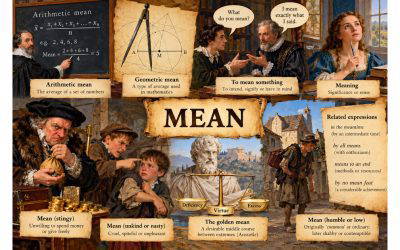
Few words in the English language work quite as hard as mean. We use it to describe an average, an intention, a miserly disposition, a mathematical calculation, and even something nasty or unpleasant. Remarkably, these meanings arise from three distinct linguistic...

Sublime
The word sublime has travelled a fascinating linguistic journey, from the physical world of ancient Rome to the heights of artistic and philosophical expression. It derives from the Latin sublimis, meaning “lofty,” “elevated,” or “raised high.” Its precise etymology...

Glamorous Grammar
Can it be true that attention to good grammar in our writing makes us glamorous? The Greek word graphein (γραʹφειν), to write, is the root of the word grammar. At first glance, the words glamour and grammar seem to have little in common. One conjures images of beauty,...

Slave
I recently posted about Book 7. I will be publishing Book 5 of the Sir Anthony Standen Adventures, Serpent’s Teeth, on the 1st of November. Book 6, Cade’s Point, is awaiting Claire’s scrutiny, and I have just written the first scene of Book 7, working title - Slave....
Drone
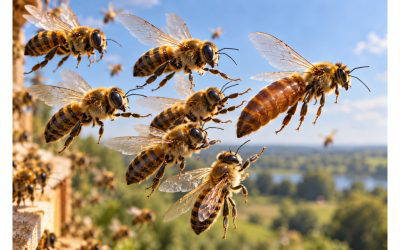
The word drone has a history stretching back many centuries, although its modern technological meaning is surprisingly recent. It began not with aircraft, but with bees. In Old English, the male honeybee was called a drān, which developed into the Middle English...
Asylum
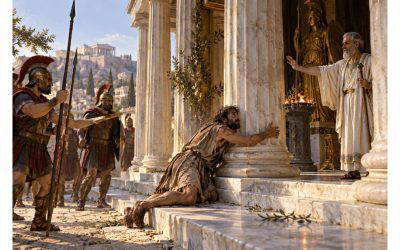
The word asylum has travelled an unusually long way: from an ancient Greek religious sanctuary, through medieval churches, to psychiatric hospitals and modern refugee law. It derives from the Greek asylon (ἄσυλον), meaning “inviolable place” or “sanctuary.” The word...
Trump
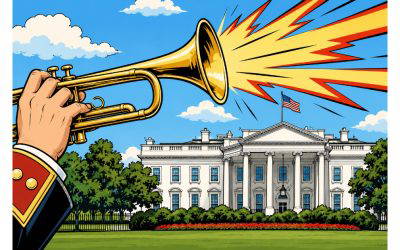
Now one of the things you can do with word of the day is enhance your hit rate by choosing words that search engines are looking for. Now I may be mistaken but I think Trump will get a few views. The Oxford Shorter English Dictionary (SOD) gives me four definitions...
Paranoid
The word paranoid comes from the Greek paranoia (παράνοια) meaning mental derangement, madness, or folly. I’m keeping my fingers crossed for an upswing in sanity at the US mid-terms. This was formed from two elements: para (παρά), meaning “beside”, “beyond” or...
Sanction
The only difficulty I have with my word of the day series is choosing the word. So today I checked the news and saw that Trump has lifted sanctions on Russia that he had only just imposed. The word sanction is a fascinating example of a word that has developed two...
What Does Mean Mean?
Few words in the English language work quite as hard as mean. We use it to describe an average, an intention, a miserly disposition, a mathematical calculation, and even something nasty or unpleasant. Remarkably, these meanings arise from three distinct linguistic...
Sublime
The word sublime has travelled a fascinating linguistic journey, from the physical world of ancient Rome to the heights of artistic and philosophical expression. It derives from the Latin sublimis, meaning “lofty,” “elevated,” or “raised high.” Its precise etymology...
Glamorous Grammar
Can it be true that attention to good grammar in our writing makes us glamorous? The Greek word graphein (γραʹφειν), to write, is the root of the word grammar. At first glance, the words glamour and grammar seem to have little in common. One conjures images of beauty,...
Slave
I recently posted about Book 7. I will be publishing Book 5 of the Sir Anthony Standen Adventures, Serpent’s Teeth, on the 1st of November. Book 6, Cade’s Point, is awaiting Claire’s scrutiny, and I have just written the first scene of Book 7, working title - Slave....
Drone
The word drone has a history stretching back many centuries, although its modern technological meaning is surprisingly recent. It began not with aircraft, but with bees. In Old English, the male honeybee was called a drān, which developed into the Middle English...
Asylum
The word asylum has travelled an unusually long way: from an ancient Greek religious sanctuary, through medieval churches, to psychiatric hospitals and modern refugee law. It derives from the Greek asylon (ἄσυλον), meaning “inviolable place” or “sanctuary.” The word...
Trump
Now one of the things you can do with word of the day is enhance your hit rate by choosing words that search engines are looking for. Now I may be mistaken but I think Trump will get a few views. The Oxford Shorter English Dictionary (SOD) gives me four definitions...