
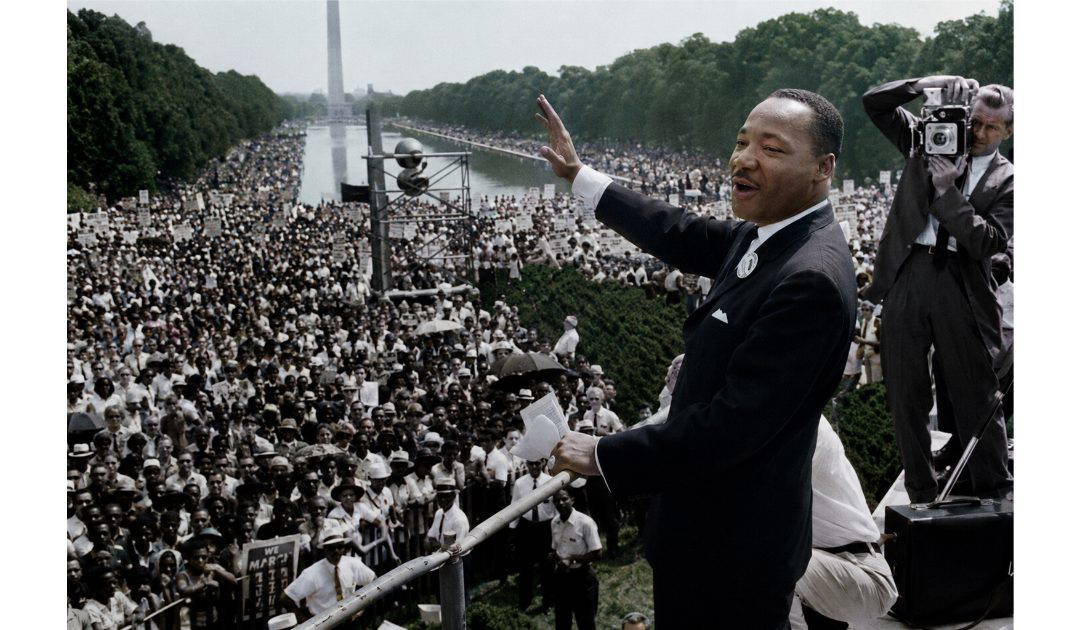
On the 28th of August, 1963, Reverend Doctor Martin Luther King gave his “I Have a Dream” speech during the March on Washington for Jobs and Freedom. I have written several times about Martin Luther, so it’s high time for the great Martin Luther King.
Martin Luther King Jr. (1929–1968) was an American Baptist minister and the most influential leader of the Civil Rights Movement in the United States. Through his commitment to non-violent protest, he helped transform American society, challenging racial segregation and discrimination while inspiring movements for justice across the world. Although his life was cut short by assassination at the age of thirty-nine, his influence continues to shape debates about equality, democracy, and human rights.
King was born on the 15th of January, 1929, in Atlanta, Georgia, into a family of ministers. His father served as pastor of Ebenezer Baptist Church, and his mother was a schoolteacher who encouraged a love of learning and music. Growing up in the segregated American South, King experienced racial prejudice from an early age. These experiences, combined with his Christian faith, convinced him that racial injustice was both morally wrong and socially destructive.
An exceptional student, King entered Morehouse College at the age of fifteen before studying theology at Crozer Theological Seminary in Pennsylvania. He later earned a doctorate in systematic theology from Boston University. While studying, he became deeply influenced by the teachings of Jesus Christ and by the philosophy of non-violent resistance developed by the Indian leader Mahatma Gandhi. King believed that peaceful protest was not a sign of weakness but a powerful moral force capable of changing society.
In 1954 King became pastor of Dexter Avenue Baptist Church in Montgomery, Alabama. His national prominence began the following year when Rosa Parks refused to surrender her seat to a white passenger on a segregated bus. Her arrest sparked the Montgomery Bus Boycott, during which African Americans refused to use the city’s buses for more than a year. As the boycott’s leader, King endured threats, harassment, and even the bombing of his home. Nevertheless, the campaign remained peaceful and eventually succeeded when the United States Supreme Court ruled that bus segregation was unconstitutional.
The success of Montgomery established King as the leading spokesman for the Civil Rights Movement. In 1957 he helped found the Southern Christian Leadership Conference (SCLC), an organisation dedicated to achieving civil rights through non-violent direct action. Throughout the late 1950s and early 1960s he travelled extensively, organising demonstrations, giving speeches, and encouraging communities to challenge segregation through peaceful means.
One of King’s most famous campaigns took place in Birmingham, Alabama, in 1963. Demonstrators faced police dogs, fire hoses, and mass arrests, shocking television audiences around the world. While imprisoned, King wrote his celebrated “Letter from Birmingham Jail,” arguing that individuals had a moral responsibility to oppose unjust laws. The letter remains one of the most important statements on civil disobedience and justice ever written.
Later that year, King helped organise the March on Washington for Jobs and Freedom, where more than 250,000 people gathered peacefully before the Lincoln Memorial. It was there that he delivered his immortal “I Have a Dream” speech, expressing his hope that one day people would “not be judged by the colour of their skin but by the content of their character.” The speech became one of the defining moments in American history.
King’s leadership contributed significantly to the passage of landmark civil rights legislation. The Civil Rights Act of 1964 outlawed segregation in public places and prohibited employment discrimination, while the Voting Rights Act of 1965 protected African Americans’ right to vote. In 1964, at just thirty-five years old, King received the Nobel Peace Prize, becoming at that time the youngest recipient of the award.
In his later years King broadened his concerns beyond racial equality. He campaigned against poverty, economic injustice, and the Vietnam War, believing that peace, social justice, and civil rights were inseparable. These positions attracted criticism from some political leaders and even from former allies, yet King remained steadfast in his convictions.
On the 4th of April, 1968, while supporting striking sanitation workers in Memphis, Tennessee, King was assassinated on the balcony of the Lorraine Motel. His death triggered grief and unrest across the United States, but it also strengthened determination to continue the struggle for equality.
Today Martin Luther King Jr. is remembered as one of history’s greatest advocates of justice and non-violent change. His birthday is observed each year as a national holiday in the United States, and his speeches and writings continue to inspire people working to overcome prejudice, defend human rights, and build more just and compassionate societies. His enduring message was that lasting change is achieved not through hatred or violence, but through courage, love, and unwavering commitment to justice.