
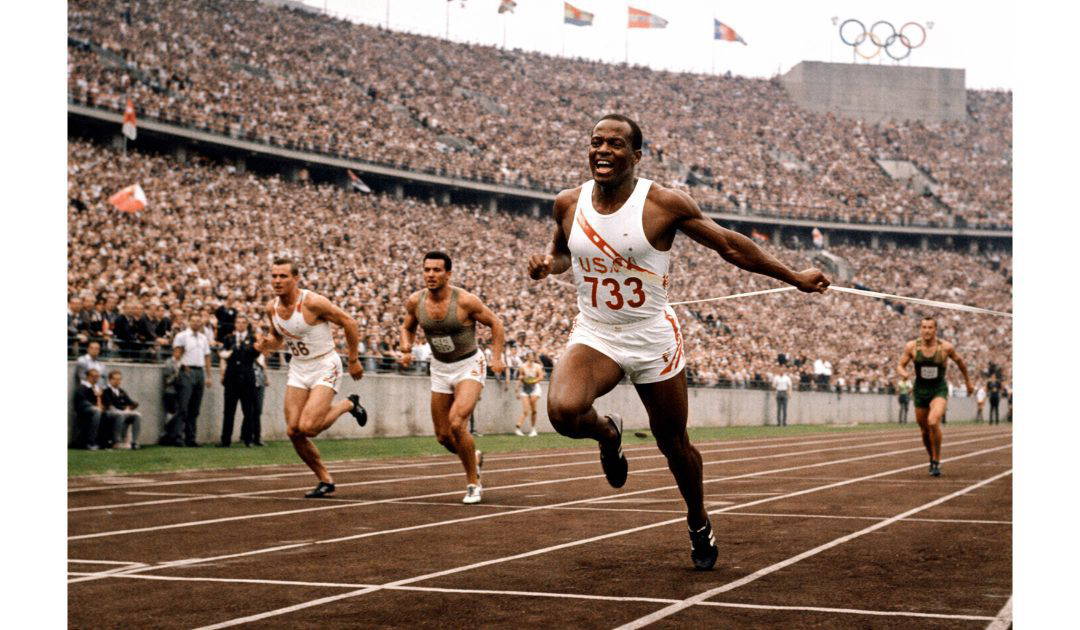
On the 3rd of August, 1936, Jesse Owens won the 100 metres sprint at the Berlin Olympic Games, shattering Hitler’s myth of Aryan supremacy. Jesse Owens was one of the most remarkable athletes of the twentieth century, a man whose achievements on the track transcended sport and became a powerful statement against racial prejudice and political propaganda. Born James Cleveland Owens on the 12th of September, 1913, in Oakville, Alabama, he was the youngest of ten children in a poor African American family. His parents were sharecroppers, and like many Black families in the segregated South, they struggled under the weight of economic hardship and racial discrimination.
When Owens was nine, his family moved north to Cleveland, Ohio, as part of the Great Migration, seeking better opportunities. It was there that a teacher misunderstood his Southern accent and recorded his name as “Jesse,” a name that would stay with him for life. In Cleveland, Owens discovered his talent for running. Despite having to work part-time jobs to support his family, he trained diligently and quickly became a standout athlete at East Technical High School.
Owens’s abilities flourished further when he attended Ohio State University. Competing for the Buckeyes, he achieved one of the most extraordinary feats in sporting history on the 25th of May, 1935, at the Big Ten Championships in Ann Arbor, Michigan. In the span of just 45 minutes, Owens set three world records and tied a fourth, a performance often described as the greatest single day in track and field history. He broke the world records in the 220-yard dash, the 220-yard low hurdles, and the long jump, while equalling the record in the 100-yard dash. Notably, he accomplished this despite suffering from a back injury.
Owens’s crowning achievement came at the 1936 Berlin Olympic Games. Held in Nazi Germany under the regime of Adolf Hitler, the Games were intended to showcase the supposed superiority of the Aryan race. Owens decisively undermined this ideology through his performances. He won four gold medals: in the 100 metres, 200 metres, long jump, and the 4 × 100 metre relay. His victories made him the most successful athlete at the Games and an international hero.
One of the most memorable moments of the Berlin Olympics occurred during the long jump competition, where Owens was struggling in the qualifying rounds. A German competitor, Luz Long, offered him advice on adjusting his take-off mark. Owens followed the suggestion, qualified successfully, and went on to win the gold medal, while Long took silver. The two men’s sportsmanship and friendship became a lasting symbol of respect that transcended the politics of the time.
Despite his global fame, Owens returned to the United States to find that racial discrimination still shaped his life. Unlike many white athletes, he did not receive lucrative endorsements or secure employment opportunities. Even after his Olympic triumphs, he was not invited to the White House by President Franklin D. Roosevelt, a reflection of the racial climate in America during the 1930s.
To earn a living, Owens turned to various pursuits, including racing against horses in exhibition events, a decision he later described with some regret. Over time, however, he became a respected public speaker, using his platform to inspire young people and promote the values of perseverance and equality. He also worked in public relations and served as a goodwill ambassador for the United States, helping to improve international relations during the Cold War era.
In his later years, Owens received increasing recognition for his contributions to sport and society. In 1976, President Gerald Ford awarded him the Presidential Medal of Freedom, the highest civilian honour in the United States. Later, in 1990, he was posthumously awarded the Congressional Gold Medal.
Owens died on the 31st of March, 1980, at the age of 66, after battling lung cancer. His legacy, however, endures far beyond his lifetime. He is remembered not only as a supreme athlete but also as a figure who challenged racial barriers and stood as a rebuke to the ideology of hatred and exclusion.
Jesse Owens’s story is one of resilience, talent, and quiet dignity. From the cotton fields of Alabama to the Olympic stadium in Berlin, his journey reflects both the possibilities and the contradictions of his era. His triumphs did not end discrimination, but they exposed its absurdity on a global stage. In doing so, Owens became more than a champion—he became a symbol of human potential and the enduring struggle for equality.