
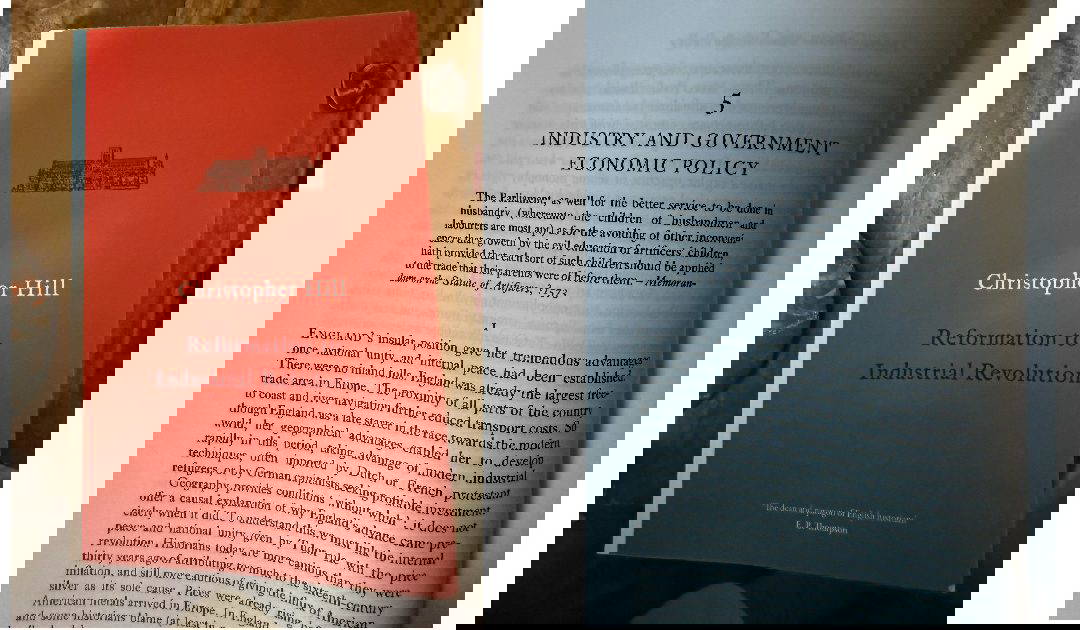
I mentioned in my post on Cade’s Point that I am reading a history textbook Reformation to Industrial Revolution by Christopher Hill. In that post I addressed the issue of education, and how the prejudice of the time was that educating the poor was both pointless and cruel. Education is the theme of by work-in-progress, Cade’s Point, the sixth book in the Sir Anthony Standen Adventures.
Talking of history, I am hoping to study for a diploma in social history. I have an interview next week, fingers crossed. Researching the people and events for my historical fiction is relatively easy, but understanding the challenges of everyday life in the past is more difficult. I recently thought I had made a terrible blunder. I had assumed that saddle bags would have existed virtually since men started riding horses. So Sir Anthony has been putting things in his saddle bags since book one, The Spy who Sank the Armada. A couple of weeks ago I decided to check that online. The source I found told me that saddle bags were invented by the White Mountain Apache in the early 19th century. Nobody seemed to have noticed this gaffe, although some reviewers have pointed to errors with horse fodder and weoponry. In both cases the reviewers were incorrect, although I see why they might have thought that. Anyway, we were in London last weekend and had lunch with my wife’s sister and her partner Mike Bishop. Mike is an archaeologist, and a world authority on Roman weaponry, amongst other things. He assured me that the Romans definitely had saddle bags, and that they pre-dated the Romans. So Sir Anthony could definitely have used them.
In case you were thinking the incorrect reviews are the injustice in the title, they are not. I shall quote from page 233 of the esteemed historian’s book.
“Between 1688 and the the end of our period the number of offences which carried the death penalty rose from about fifty to nearly five times that number. The vast majority of these were offences against property, and most offenders, in London at least, were under twenty-one years of age. A man was hanged for stealing one shilling, a boy of sixteen for stealing 3s. 6d and a penknife, a girl for a handkerchief.”
I hope that I am successful in my interview, because we must all continue to learn from history.