
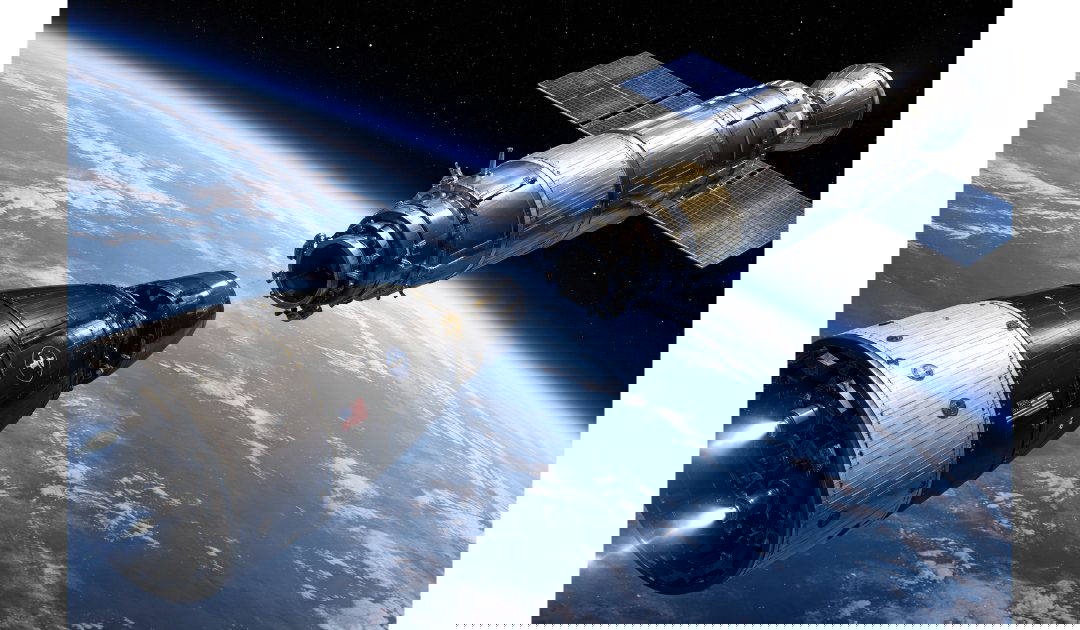
On the 16th of March, 1966, Gemini 8 was launched with Neil Armstrong and David Scott on board. I would have been six years of age. I can’t remember a time when I wasn’t fascinated by flight and space flight, but the details of the Gemini missions are not lodged in my memory. I think the Apollo missions were the ones that reeled me in.
NASA’s Gemini program (1961–1966) was the crucial bridge between the short, proof-of-concept Mercury flights and the ambitious lunar expeditions of Apollo. If Mercury had demonstrated that an American could survive in space, Gemini was designed to prove that astronauts could work there. The program’s name, meaning “twins,” reflected its two-man crews, but also its dual purpose: mastering the techniques of orbital flight while developing the practical skills needed for a journey to the Moon. Over ten crewed missions, Gemini pioneered long-duration spaceflight, rendezvous and docking, extravehicular activity (EVA), precision re-entry, and controlled landings—every one of them essential for Apollo’s success.
Gemini spacecraft were far more advanced than their Mercury predecessors. They had onboard computers, orbital manoeuvring thrusters, fuel cells for longer missions, and hatches that could be opened in space. Most importantly, astronauts learned how to change orbits deliberately to meet another spacecraft. This ability, known as orbital rendezvous, was not intuitive; early spaceflight theory had even questioned whether it was possible. Gemini proved that it was not only possible, but controllable.
Among all the Gemini missions, Gemini 8, launched on the 16th of March, 1966, stands out as one of the most dramatic and instructive flights in the history of space exploration.
Gemini 8 was commanded by Neil Armstrong, with David Scott as pilot. Their primary objective was to rendezvous and dock with an unmanned Agena target vehicle, which had been launched into orbit shortly before them. Docking was a critical capability for Apollo, where the lunar module would need to separate from and rejoin the command module in lunar orbit. Gemini 8’s task was to prove that such a manoeuvre could be achieved reliably.
The Agena launch went perfectly. Gemini 8 lifted off from Cape Kennedy atop a Titan II rocket and quickly entered orbit. Using careful calculations and precise thruster burns, Armstrong guided the spacecraft toward the Agena. After several hours of orbital adjustments, Gemini 8 approached the target vehicle and, in a landmark moment, achieved the first docking between two spacecraft in history. For a few minutes, the mission was an unqualified triumph. Then things began to go wrong.
Shortly after docking, the combined Gemini-Agena craft started to roll slowly. At first, the astronauts suspected the Agena’s attitude control system. Armstrong undocked to stabilise the situation—but instead of stopping, the rotation became more violent. Gemini 8 began spinning faster and faster, reaching nearly one revolution per second. The astronauts’ vision blurred; they were in danger of losing consciousness. If that happened, the spacecraft would continue spinning until centrifugal forces or structural failure destroyed it.
Armstrong quickly realised the problem was not the Agena but one of Gemini’s own thrusters, stuck open and firing continuously. With remarkable calm, he shut down the spacecraft’s main thruster system and activated the re-entry control system—fuel reserved for returning to Earth. Using these thrusters, he countered the spin and regained control of the spacecraft.
The immediate crisis was over, but the mission could not continue. With their re-entry fuel partly used, NASA had no choice but to abort. Gemini 8 splashed down in the Pacific Ocean after only about ten hours in space.
Although cut short, Gemini 8 became one of the most important missions of the program. It demonstrated both the feasibility of docking and the very real dangers of spaceflight hardware failure. The incident led to design reviews, improved thruster systems, and new emergency procedures. Armstrong’s cool handling of the crisis earned him enormous respect within NASA—confidence that would later influence his selection to command Apollo 11.
Gemini as a whole continued to build on these hard-won lessons. Gemini 4 saw the first American spacewalk by Ed White. Gemini 5 proved astronauts could endure eight days in orbit—the time needed for a lunar mission. Gemini 6 and 7 conducted the first rendezvous between two crewed spacecraft. Gemini 9, 10, 11, and 12 refined EVA techniques, docking procedures, and high-apogee orbits. By the end of the program, NASA had effectively rehearsed every major operation Apollo would require, except landing on the Moon itself.
The Gemini program also transformed astronauts from passive passengers into skilled orbital pilots. They learned to navigate by sight, to trust and interpret their instruments, and to think quickly under pressure. The missions revealed how exhausting EVA could be, how tricky orbital mechanics were in practice, and how vital redundant systems and clear procedures would be for future flights.
In retrospect, Gemini 8 encapsulates the spirit of the entire program. It achieved a historic first, encountered a life-threatening emergency, and returned invaluable lessons that shaped future missions. What could have been a fatal disaster became a demonstration of human skill and engineering resilience.
Without Gemini—and without the near-catastrophe and success of Gemini 8—the Moon landings of Apollo would have been far riskier. Gemini turned theory into practice, and astronauts into masters of their spacecraft. It was the program where NASA really learned how to operate in space, and Gemini 8 was the mission that proved just how quickly those lessons might be needed.