
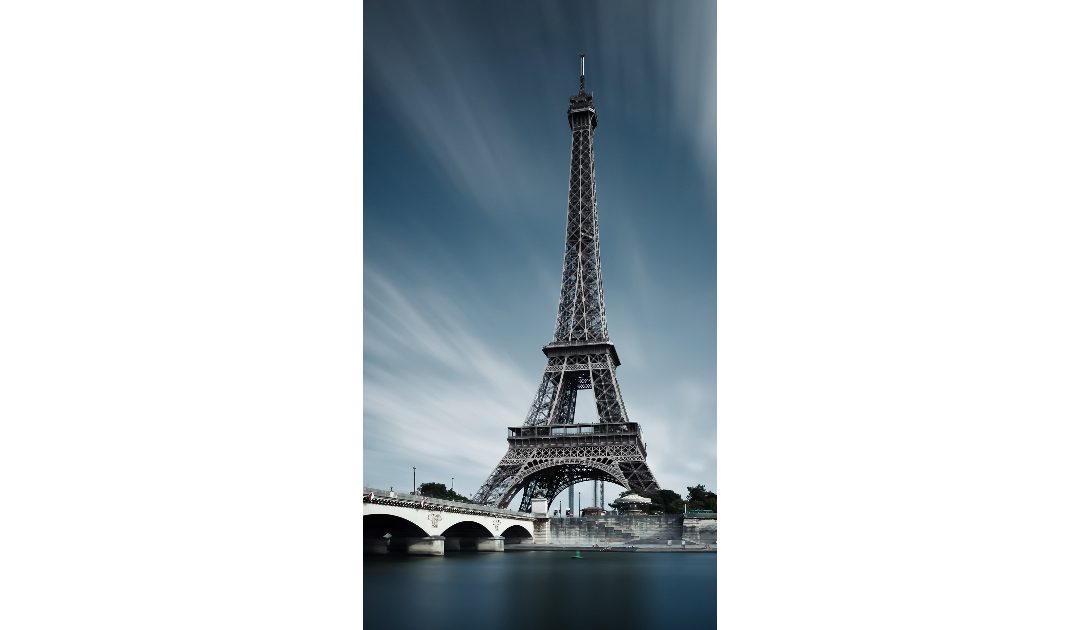
On the 31st of March, 1889, the Eiffel Tower was officially opened. The Eiffel Tower is one of the most recognisable structures in the world and a defining symbol of Paris and of modern engineering. Rising 300 metres above the Champ de Mars beside the River Seine, it was built for the Exposition Universelle of 1889, the world’s fair that marked the centenary of the French Revolution. Its creator, the engineer Gustave Eiffel, did not set out to build a romantic icon; he intended to demonstrate the possibilities of iron construction, scientific progress, and French industrial skill. What began as a temporary exhibition structure became a permanent emblem of modernity.
Gustave Eiffel was born Alexandre Gustave Bonickhausen dit Eiffel in Dijon in 1832. He later adopted “Eiffel,” a name derived from his family’s German origins in the Eifel region. Educated as a civil engineer at the École Centrale des Arts et Manufactures in Paris, Eiffel specialised in metal construction at a time when iron was transforming architecture and infrastructure. He built his reputation designing railway bridges and viaducts across France and abroad, including the impressive Garabit Viaduct in the Massif Central. His firm also contributed to the internal iron framework of the Statue of Liberty, designed by Frédéric Auguste Bartholdi, demonstrating Eiffel’s mastery of lightweight yet strong iron structures.
The idea for the Eiffel Tower did not originate directly from Eiffel himself but from two of his senior engineers, Maurice Koechlin and Émile Nouguier, in 1884. They sketched a bold proposal for a 300-metre iron tower supported by four lattice girders that curved inward and met at the top. Eiffel immediately saw the potential of the idea, purchased the patent rights, and refined the design with the architect Stephen Sauvestre, who added decorative arches and glass pavilions to make the structure more visually appealing.
In 1886, the French government announced a competition for a monument to dominate the 1889 exposition. Eiffel’s design was selected from over 100 entries. However, the proposal provoked fierce opposition. Many leading artists and intellectuals, including Guy de Maupassant and Charles Garnier, signed a petition condemning the tower as a monstrous iron skeleton that would disfigure Paris. They saw it as an industrial eyesore, incompatible with the city’s classical beauty.
Eiffel defended his project vigorously. He argued that the tower was an expression of its age, just as Gothic cathedrals had reflected theirs. He emphasised its scientific value, predicting its use for meteorology, aerodynamics, and communications. Crucially, he also financed much of the project himself in exchange for operating rights for twenty years, reducing the financial risk to the state.
Construction began in January 1887. The scale of the engineering challenge was unprecedented. The tower was made from more than 18,000 individual puddled iron pieces, prefabricated in Eiffel’s workshops and assembled on site with over 2.5 million rivets. Despite its height, the structure was remarkably light, weighing about 7,300 tonnes. Its lattice design allowed wind to pass through, reducing pressure and ensuring stability. Each of the four legs rested on massive masonry foundations, and hydraulic jacks were used to ensure precise alignment as the legs rose and converged.
The work progressed with extraordinary efficiency. At a time when industrial accidents were common, only one worker died during construction, a testament to Eiffel’s insistence on safety. By March 1889, just over two years after work began, the tower was complete. It stood as the tallest man-made structure in the world, surpassing the Washington Monument, and would hold that record until the Chrysler Building was erected in New York in 1930.
When the Exposition Universelle opened, the Eiffel Tower was the centrepiece. Millions of visitors ascended its platforms for panoramic views of Paris. Initial scepticism began to fade as the public marvelled at the achievement. Yet the tower was still intended to be dismantled in 1909, when Eiffel’s concession expired.
What saved the tower was precisely what Eiffel had predicted: its scientific and practical uses. From the 1890s onward, it was used for meteorological observations and aerodynamic experiments. More importantly, it became a vital platform for radio transmission. By the early twentieth century, wireless telegraphy from the tower proved invaluable for military and civilian communications. Its strategic importance during the First World War ensured its preservation.
Gustave Eiffel himself did not fully enjoy the later fame of his tower. In the early 1890s, he was embroiled in the Panama Canal scandal, accused—though later largely exonerated—of financial misconduct related to the failed French canal project. The controversy damaged his reputation and led him to withdraw from large-scale commercial engineering. He devoted his later years to scientific research, particularly in aerodynamics and meteorology, establishing laboratories and publishing studies. He died in 1923 at the age of ninety-one.
Over time, the Eiffel Tower’s meaning transformed. What had once been criticised as ugly became cherished as elegant and symbolic. It survived two world wars; during the German occupation in the Second World War, the French famously cut the lift cables so that Nazi officials would have to climb the stairs if they wished to reach the top. After the war, it became a universal symbol of Paris, romance, and French identity.
Today, the Eiffel Tower attracts millions of visitors each year. Painted regularly to protect it from corrosion, it remains a functioning communications mast as well as a tourist attraction. More than a monument, it represents a turning point in architectural history: the acceptance of iron and steel as materials of beauty as well as utility.
The story of the Eiffel Tower is inseparable from that of Gustave Eiffel. His vision, technical expertise, and willingness to defy critics allowed an audacious idea to become reality. In building the tower, Eiffel demonstrated that engineering could inspire as much awe as art, leaving a legacy that still defines the skyline of Paris and the imagination of the world.