
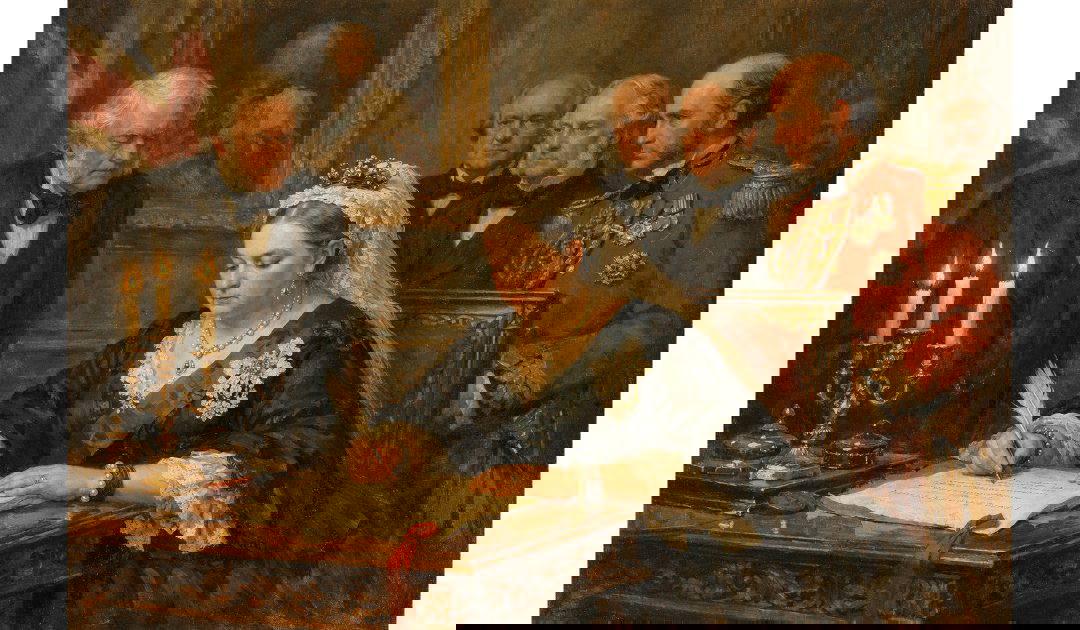
On the 29th of March, 1867, Queen Victoria gave Royal Assent to the British North America Act which formally established Canada. The history of Canada is a long and layered story of Indigenous civilizations, European exploration and rivalry, colonial struggle, gradual self-government, and the evolution of a modern, bilingual, multicultural state stretching from the Atlantic to the Pacific and into the Arctic.
Long before Europeans arrived, the land that would become Canada was home to diverse and sophisticated Indigenous peoples. First Nations, Inuit, and later the Métis developed complex societies adapted to very different environments: the woodland cultures of the east, the buffalo-hunting nations of the plains, the maritime peoples of the Pacific coast, and the Arctic communities of the north. They traded across vast distances, governed themselves through established political systems, and maintained rich spiritual and oral traditions. These societies were deeply connected to the land and had well-defined territories and alliances long before European contact.
The first known European contact came around the year 1000, when Norse explorers briefly established a settlement at L’Anse aux Meadows in Newfoundland. This did not lead to sustained contact, and it was not until the late fifteenth century that Europeans returned. In 1497 John Cabot, sailing for England, reached the Atlantic coast, reporting rich fishing grounds. In the early sixteenth century, French and Portuguese fishermen followed, exploiting the cod fisheries off Newfoundland.
The real beginning of European colonization came with the French. In 1534 Jacques Cartier explored the Gulf of St Lawrence and claimed the region for France. In 1608 Samuel de Champlain founded Quebec City, establishing the colony of New France. The French presence grew along the St Lawrence River, the Great Lakes, and eventually deep into the interior through fur-trading networks. French settlers, known as habitants, farmed the river valleys, while coureurs des bois and voyageurs forged alliances with Indigenous nations and extended French influence westward. Catholic missionaries also played a significant role in the colony.
At the same time, the English were establishing their own footholds along the Atlantic seaboard. The Hudson’s Bay Company, founded in 1670, claimed vast territories around Hudson Bay known as Rupert’s Land, focusing on the fur trade. Rivalry between France and Britain in North America mirrored conflicts in Europe. A series of colonial wars culminated in the Seven Years’ War (1756–1763). In 1759 British forces defeated the French at the Battle of the Plains of Abraham outside Quebec City. By the Treaty of Paris in 1763, France ceded most of its North American possessions to Britain.
Britain now faced the challenge of governing a large French-speaking Catholic population. The Quebec Act of 1774 allowed French civil law, Catholic worship, and seigneurial landholding to continue, laying the foundations of Canada’s dual linguistic and legal heritage. This decision angered some American colonists and contributed to tensions that led to the American Revolution.
After the Revolution, tens of thousands of Loyalists—Americans who remained loyal to Britain—migrated north, settling in what became Upper Canada (modern Ontario) and the Maritimes. To accommodate English-speaking settlers, Britain divided Quebec into Upper and Lower Canada in 1791, each with its own government.
Tensions grew in both colonies over political reform and responsible government. In 1837–38, rebellions broke out in Upper and Lower Canada, demanding greater democracy. Though suppressed, they led to significant change. The Durham Report recommended uniting the colonies and granting responsible government. In 1841, Upper and Lower Canada were merged into the Province of Canada, and by the late 1840s responsible government—where elected officials, not the governor, controlled policy—was achieved.
Meanwhile, British North America consisted of several separate colonies: Canada (Ontario and Quebec), Nova Scotia, New Brunswick, Prince Edward Island, Newfoundland, and British Columbia. Economic concerns, fears of American expansion after the Civil War, and the desire for a transcontinental nation led to discussions of union. In 1867, the British North America Act created the Dominion of Canada, initially uniting Ontario, Quebec, Nova Scotia, and New Brunswick under a federal system. Sir John A. Macdonald became the first prime minister.
Expansion westward followed. Canada purchased Rupert’s Land from the Hudson’s Bay Company in 1869. The transfer sparked resistance from the Métis at Red River under Louis Riel, leading to the creation of Manitoba in 1870. British Columbia joined Confederation in 1871, encouraged by the promise of a transcontinental railway, which was completed in 1885. Prince Edward Island joined in 1873, and Newfoundland much later, in 1949.
The building of the nation came at great cost to Indigenous peoples. Treaties were often poorly honoured, traditional lands were taken, and policies such as the residential school system sought to erase Indigenous cultures and languages. The legacy of these actions remains a central issue in Canadian society today, with ongoing efforts toward reconciliation.
Canada’s autonomy from Britain grew gradually. It contributed troops to the British Empire in conflicts such as the South African War and, more significantly, the First World War. Canadian forces at Vimy Ridge in 1917 became a symbol of national achievement. I have written about the First World War including the battles of Passchendale and Gallipoli, so I must write about Vimy Ridge. After the war, Canada signed the Treaty of Versailles independently and joined the League of Nations. The Statute of Westminster in 1931 granted Canada full legislative independence, though constitutional ties remained.
The Second World War further strengthened Canada’s international role and industrial capacity. After 1945, Canada experienced economic growth and increased immigration, shaping its modern multicultural identity. Social programs such as universal healthcare emerged in the mid-twentieth century.
In 1982, Canada patriated its constitution from Britain with the Constitution Act, which included the Canadian Charter of Rights and Freedoms. This enshrined civil liberties and became a cornerstone of Canadian law. However, debates over Quebec’s place in Canada intensified, leading to referendums on sovereignty in 1980 and 1995, both of which resulted in votes to remain within Canada.
Today, Canada is a federal parliamentary democracy and constitutional monarchy, officially bilingual in English and French, and recognized for its cultural diversity. Its history is marked by compromise, negotiation, and gradual evolution rather than revolution. From Indigenous foundations through colonial rivalry to independent nationhood, Canada’s past continues to shape its present as it grapples with reconciliation, regional identities, and its role on the global stage.