
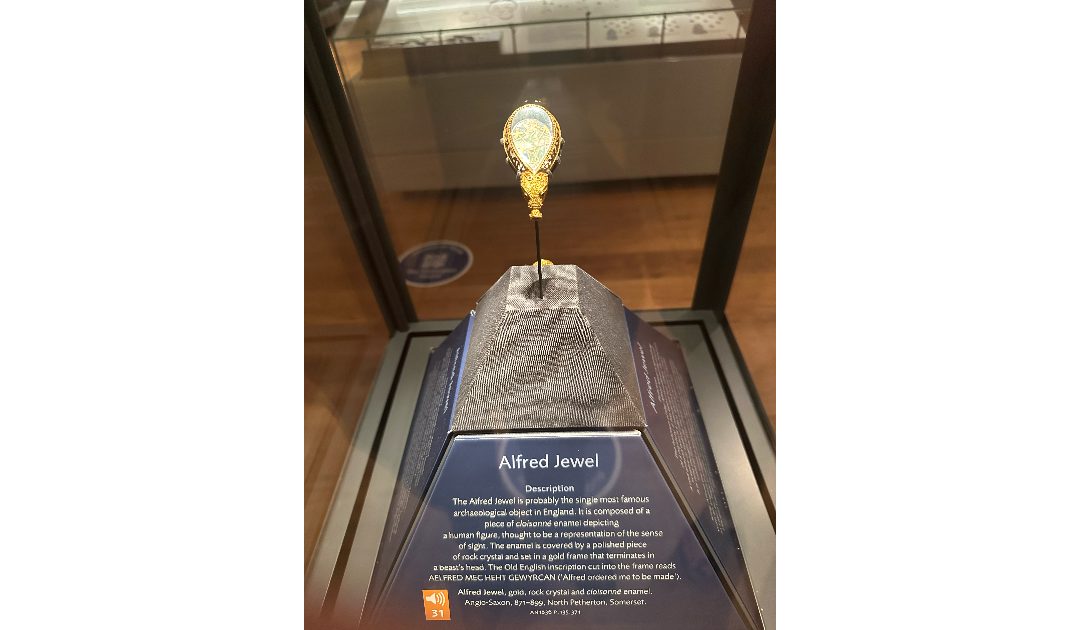
On the 24th of May, 1683, the Ashmolean Museum opened in Oxford. It was the world’s first university museum. Well, I’ll take any excuse to write about Oxford.
The Ashmolean Museum is one of the great cultural treasures of Britain and holds a unique place in the history of museums worldwide. Situated on Beaumont Street in Oxford, it is widely regarded as the world’s first university museum and one of the earliest public museums in Europe. Its rich collections span archaeology, art, history, and material culture from across the globe, making it both an academic institution and a major visitor attraction.
The museum traces its origins to the seventeenth century. Its foundation lies in the remarkable collection of curiosities assembled by John Tradescant the Elder and his son, John Tradescant the Younger. These men were gardeners, collectors, and travellers who gathered natural specimens, ethnographic objects, antiquities, and unusual artefacts from around the world. Their collection, known as “The Ark,” was one of the earliest cabinets of curiosities in England. In 1677, the younger Tradescant bequeathed the collection to Elias Ashmole, an antiquary and scholar. Ashmole, in turn, donated it to the University of Oxford on condition that a proper building be constructed to house it.
That building was completed in 1683, making the Ashmolean the first purpose-built public museum in Britain. Unlike private collections accessible only to the elite, it was open to the public, though visitors had to apply in writing for admission. The original building still stands on Broad Street and today houses the Museum of the History of Science. The present Ashmolean building on Beaumont Street dates from the nineteenth century, with major renovations and extensions completed in 2009, which transformed the museum into a modern exhibition space while preserving its historic character.
The Ashmolean’s collections are astonishingly broad. Its archaeological holdings are among the finest in Britain outside London. The Egyptian collection is particularly celebrated, featuring mummies, coffins, statuary, and everyday objects that illuminate life along the Nile over thousands of years. The museum also houses important material from ancient Greece and Rome, including pottery, sculpture, and inscriptions that chart the development of classical civilisation.
One of the Ashmolean’s greatest strengths lies in its Western art collections. It possesses outstanding paintings from the Renaissance to the twentieth century. Works by masters such as Leonardo da Vinci, Michelangelo, Raphael, Rembrandt, and Turner are represented, though often in the form of drawings and works on paper rather than large oil paintings. The museum’s print and drawing collection is internationally renowned and serves as a vital research resource for scholars.
The museum also holds significant collections of Eastern art. Its Chinese and Japanese holdings include ceramics, scroll paintings, and lacquerware that demonstrate the technical brilliance and aesthetic sophistication of East Asian cultures. Islamic art is another area of strength, with textiles, metalwork, and ceramics reflecting the diversity of artistic production across the Islamic world. Through these collections, the Ashmolean offers visitors a global perspective that transcends national boundaries.
Numismatics – the study of coins and currency – is another field in which the Ashmolean excels. Its coin collection is one of the largest and most important in the world, spanning ancient Greek and Roman coinage through to modern currency. These small objects provide invaluable evidence for trade, politics, iconography, and economic history.
The Ashmolean has long been intertwined with the academic life of the University of Oxford. It is not merely a display space but a centre for research and teaching. Students and scholars use its collections to study art history, archaeology, and conservation. The museum also engages the wider public through lectures, workshops, and temporary exhibitions that explore specific themes or artists in depth.
The 2009 redevelopment greatly enhanced the visitor experience. New galleries were created, objects were displayed in more coherent chronological narratives, and improved facilities were added. The renovation helped to present the museum not simply as a storehouse of treasures but as a place where stories about humanity’s past and present could be told in engaging and accessible ways.
Today, the Ashmolean stands as a testament to the Enlightenment ideal that knowledge should be collected, organised, and shared. From its beginnings as a cabinet of curiosities to its current status as a world-class museum, it reflects changing attitudes toward collecting, scholarship, and public access. For visitors to Oxford, it offers an extraordinary journey through time and across continents, revealing the creativity, belief systems, and daily lives of people from ancient Egypt to modern Europe and beyond.