
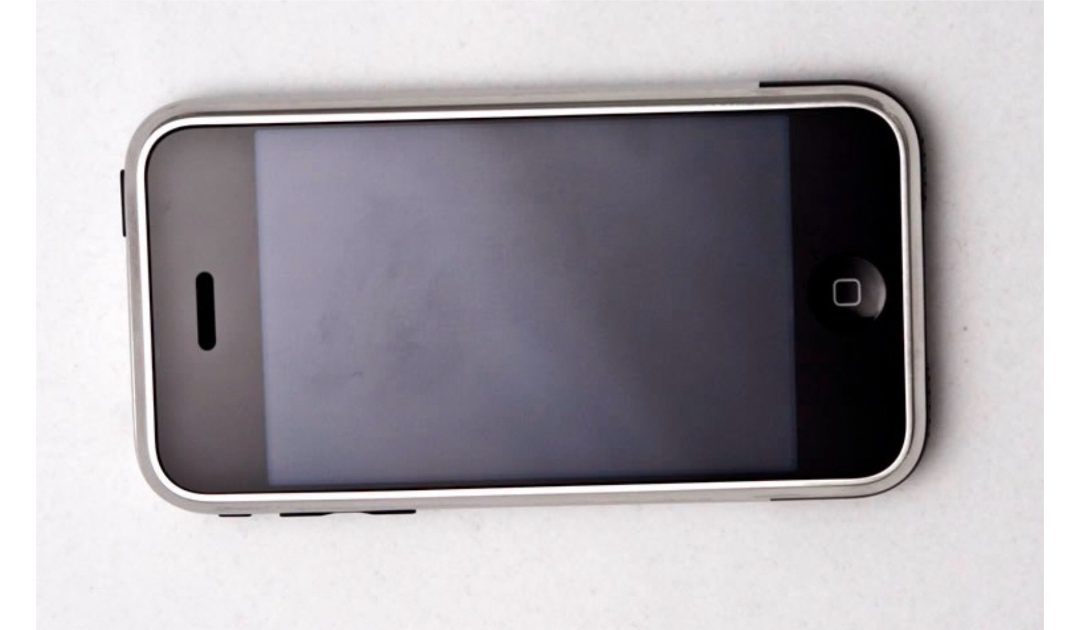
On the 29th of June, 2007, Apple released its first mobile phone, the iPhone. I have checked my CV and I was working for WSP on the new terminal for Delhi International Airport at that point. I probably had a company Nokia. I bought an iPad after being very impressed by one that an architect I was working with had. I believe that I already had an iPod at that point. I think my first iPhone was an iPhone3. I’ve been all Apple virtually ever since.
The development of the Apple iPhone represents one of the most significant technological transformations of the early twenty-first century, reshaping not only the mobile phone industry but also the way people interact with digital technology. From its origins within Apple Inc. to its evolution into a global cultural and economic force, the iPhone’s story is one of innovation, risk, and continual refinement.
The iPhone project began in the early 2000s, when Apple sought to expand beyond its successful line of Macintosh computers and the hugely popular iPod. At the time, mobile phones were dominated by companies such as Nokia and BlackBerry Limited, whose devices focused on physical keyboards and business-oriented features. Apple’s co-founder, Steve Jobs, envisioned a radically different product: a device that combined a phone, an iPod, and an internet communicator into a single, elegant touchscreen interface.
Development was highly secretive. Internally known as “Project Purple,” Apple’s engineers worked intensively to create a new type of user interface based on multi-touch technology. This allowed users to interact with the device using gestures such as swiping and pinching—features that are now standard but were revolutionary at the time. Apple also had to miniaturise computing components, improve battery life, and develop a robust operating system, which became known as iOS.
The first iPhone was unveiled by Steve Jobs on 9 January 2007 at the Macworld Conference in San Francisco, California. His presentation is often regarded as one of the most iconic product launches in history. Jobs famously described the device as three products in one: “a widescreen iPod with touch controls, a revolutionary mobile phone, and a breakthrough internet communications device.” The iPhone went on sale in June 2007 in the United States and was met with widespread enthusiasm, despite its high price and initial limitations, such as the lack of third-party apps and 3G connectivity.
The early success of the iPhone led to rapid development and iteration. In 2008, Apple introduced the iPhone 3G alongside the App Store, which allowed third-party developers to create and distribute applications. This marked a turning point, transforming the iPhone from a standalone product into a platform. The App Store ecosystem enabled the rise of mobile software industries, from gaming to social media, and fundamentally changed how software was consumed.
Subsequent models continued to refine the device. The iPhone 4, released in 2010, introduced a high-resolution “Retina” display and a new industrial design featuring glass and stainless steel. It also brought forward-facing cameras, enabling video calls through FaceTime. In 2011, Apple introduced Siri, a voice-activated assistant, with the iPhone 4S, signalling a move toward more intuitive human-device interaction.
Over the years, Apple has consistently pushed advancements in hardware and software. Innovations have included improved cameras capable of professional-quality photography, biometric security features such as Touch ID and Face ID, and increasingly powerful processors designed in-house by Apple. These developments have allowed the iPhone to replace many standalone devices, including digital cameras, GPS units, and even wallets.
The iPhone has also had a profound impact on global society and the economy. It helped popularise the modern smartphone era, influencing competitors such as Samsung Electronics and the development of operating systems like Android. Entire industries—such as ride-sharing, mobile banking, and social media—have grown around smartphone technology, with the iPhone often at the centre of this transformation.
Moreover, the iPhone has played a key role in shaping digital culture. It has changed how people communicate, access information, and consume media. Social platforms, photography, and video creation have all been deeply influenced by the device’s capabilities. The concept of constant connectivity, now taken for granted, owes much to the widespread adoption of smartphones led by Apple’s innovation.
Despite its success, the iPhone’s development has not been without criticism. Concerns have been raised about issues such as device pricing, electronic waste, and the company’s control over its ecosystem. Nevertheless, Apple has continued to adapt, introducing initiatives focused on environmental sustainability and user privacy.
Today, the iPhone remains one of the most influential consumer products ever created. Its development reflects a broader trend toward convergence in technology, where multiple functions are integrated into a single device. What began as a bold idea within Apple has grown into a cornerstone of modern life, demonstrating the power of design, innovation, and vision in shaping the future.