
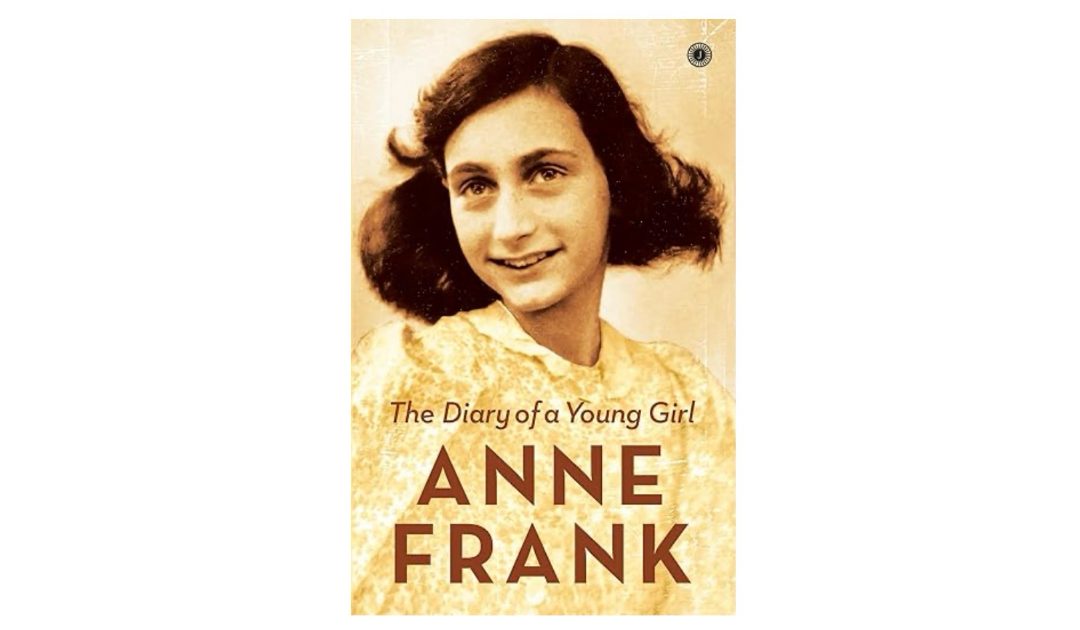
On the 12th of June, 1942, Anne Frank received a diary for her thirteenth birthday. Anne Frank (1929–1945) is one of the most widely known victims of the Holocaust. Through the diary she kept while hiding from Nazi persecution during the World War II, she left behind a powerful and deeply human record of life under oppression. Her writing, later published as The Diary of a Young Girl, has become one of the most widely read books in the world and an enduring symbol of the suffering caused by war and hatred.
Anne Frank was born in Frankfurt, Germany, to Otto Frank and Edith Frank. She had an older sister, Margot Frank. The Frank family was Jewish and lived in Germany during a time of growing antisemitism. When Adolf Hitler and the Nazi Party came to power in 1933, conditions for Jewish people rapidly worsened. Facing discrimination and danger, Otto Frank decided to move his family to Amsterdam in the Netherlands, where he hoped they would be safe.
For several years Anne lived a relatively normal life in Amsterdam. She attended school, made friends, and showed a lively personality and a love of writing. However, this period of relative safety ended in May 1940 when Nazi Germany invaded and occupied the Netherlands. Anti-Jewish laws were introduced, gradually restricting the freedoms of Jewish citizens. Jews were forced to wear the yellow Star of David, excluded from many public places, and barred from attending ordinary schools.
When Anne received a red-and-white checked diary as a present, she quickly began writing in it, addressing many entries to an imaginary friend she called “Kitty.” Just weeks later, events took a dramatic turn. When Margot received a summons ordering her to report to a Nazi labour camp, the family decided to go into hiding.
On the 6th of July, 1942, the Frank family moved into a secret hiding place known as the “Secret Annex,” located in the building where Otto Frank had once run his business. The concealed rooms were hidden behind a movable bookcase. Soon they were joined by four other Jewish refugees: Hermann van Pels, Auguste van Pels, their son Peter van Pels, and later Fritz Pfeffer. Several non-Jewish friends and employees, including Miep Gies, risked their lives to bring them food, supplies, and news from the outside world.
Anne spent more than two years in hiding. During this time she continued to write extensively in her diary. Her entries reveal her thoughts about daily life in confinement, the tensions among the group, and the constant fear of discovery. She also wrote about typical teenage concerns—friendships, her relationship with her parents, and her growing independence. As she matured, her writing became more reflective and insightful. Anne hoped one day to become a writer or journalist.
In 1944 Anne began revising parts of her diary after hearing a radio broadcast from the Dutch government in exile encouraging citizens to preserve wartime documents for the future. She started editing her entries with the idea of publishing them after the war.
Tragically, the group’s hiding place was betrayed. On the 4th of August, 1944, German police raided the Secret Annex and arrested everyone inside. They were sent first to the transit camp of Westerbork transit camp and later deported to Auschwitz concentration camp in occupied Poland.
Later that year Anne and her sister Margot were transferred to Bergen-Belsen concentration camp in Germany. Conditions there were catastrophic, with severe overcrowding, starvation, and disease. My father was one of the first allied troops to arrive at Belsen. He had many war stories that he would tell, but he never wanted to talk about Belsen. In early 1945 both sisters died of typhus, only weeks before the camp was liberated. Anne was fifteen years old.
Otto Frank was the only member of the eight people who hid in the Secret Annex to survive the war. After returning to Amsterdam, he was given Anne’s preserved diary by Miep Gies, who had rescued the papers after the arrest. Recognizing the importance of his daughter’s writing, Otto arranged for it to be published in 1947.
Since then, Anne Frank’s diary has been translated into dozens of languages and read by millions of people around the world. The hiding place in Amsterdam is now preserved as the Anne Frank House museum, visited by people seeking to understand the realities of persecution and the human stories behind the Holocaust.
Anne Frank’s words continue to resonate because they combine youthful honesty with profound insight. Her diary offers a unique perspective on history—not from a battlefield or a political leader, but from a young girl whose life was cut tragically short. Through her writing, Anne Frank remains a powerful voice reminding the world of the importance of tolerance, human dignity, and the need to resist hatred in all its forms.
Called to Account, the fourth book in the Sir Anthony Standen Adventures, is set during the Fettmilch Uprising, a 17th century pogrom in Frankfurt. The theme is anti-semitism, which the young Standen twins do their utmost to counter.