
Airey Neave
On the 30th of March, 1979, Lieutenant Colonel Airey Middleton Sheffield Neave DSO OBE MC TD and Member of Parliament was assassinated in a car bomb attack at the House of Commons by the Irish National Liberation Army.
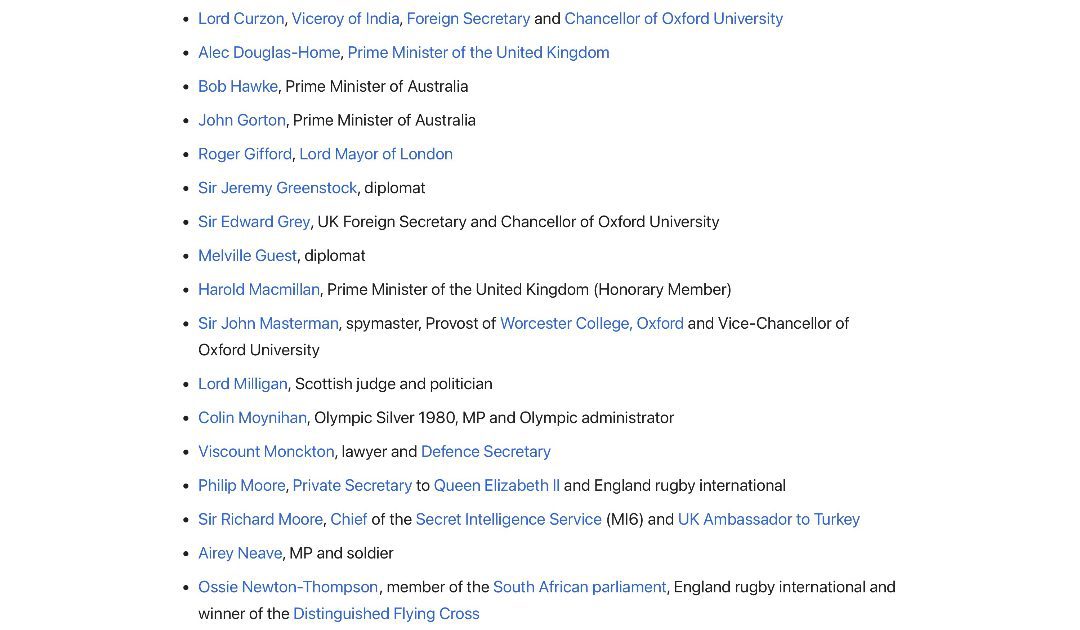
I have mentioned Oxford University’s Vincent’s Club, and Airey Neave was a member, along with famous people including Harold MacMillan, Lord Curzon, Alec Douglas Home, and not so famous people such as myself. I matriculated into the University of Oxform just six months after Airey Neave was murdered. I cannot believe that I haven’t posted about Colditz Castle, because visiting there in 2016 was an incredible experience. Airey Neave was the first British prisoner of war to succeed in escaping from Colditz. So let’s go through his life in more detail.
Neave was born on the 23rd of January, 1916, in Knightsbridge, London, into a military family. His father, Lieutenant-Colonel Sheffield Airey Neave, had served in the British Army. Educated at Eton College and later at Merton College, Oxford, Neave showed early signs of intelligence and determination. At Oxford he studied law and developed a strong interest in public affairs. On the outbreak of the Second World War in 1939, he joined the Territorial Army and was commissioned into the Royal Artillery.
In 1940, during the chaotic fighting in France that culminated in the Dunkirk evacuation, Neave was captured by German forces near Calais. He became one of the first British officers to be taken prisoner in the war. He was eventually sent to Colditz Castle, the notorious high-security prisoner-of-war camp reserved for “incorrigible” Allied officers who had already attempted escape. Colditz was considered escape-proof, perched on a hilltop in Saxony and guarded with particular vigilance.
Neave refused to accept captivity. After several failed attempts, he and a Dutch officer, Lieutenant Tony Luteyn, finally succeeded in January 1942. Disguised as German soldiers and carrying forged papers, they walked out of the castle gates in broad daylight. The escape required nerve, careful planning, and fluency in German. They travelled across Germany, through occupied France, and eventually reached neutral Switzerland. Neave thus became the first British officer to escape from Colditz and make his way back to Britain. His escape became legendary, and after the war he wrote a celebrated account, Saturday at M.I.9, describing both his imprisonment and the work of the British escape organisation that helped returning prisoners.
Following his return to Britain, Neave was recruited into MI9, the secret service department responsible for aiding Allied prisoners of war and helping resistance networks. He helped plan escape lines and support operations across occupied Europe. Later in the war he served as a staff officer at the Nuremberg Trials, where leading Nazi war criminals were prosecuted. This experience left a lasting impression on him and deepened his commitment to law, order, and the defence of democratic institutions.
After the war, Neave returned to the law, being called to the Bar at the Inner Temple. However, public life soon drew him into politics. A committed Conservative, he was elected Member of Parliament for Abingdon in 1953 at a by-election, a seat he would hold for the rest of his life. In Parliament he developed a reputation for seriousness, discipline, and loyalty rather than flamboyance. His wartime record gave him a certain authority, and he was respected across parties.
Neave’s political importance grew significantly in the 1970s. A staunch opponent of what he saw as the decline of British authority and confidence, he became closely associated with the right wing of the Conservative Party. Most notably, he played a crucial role in the political rise of Margaret Thatcher. In 1975, when Thatcher challenged Edward Heath for the party leadership, Neave served as her campaign manager. His organisational skill, strategic thinking, and personal connections within the parliamentary party were vital in securing her unexpected victory. Thatcher later acknowledged that without Neave’s support and planning, her leadership bid might well have failed.
As Thatcher’s confidant, Neave was expected to hold a senior position in any future Conservative government. He was particularly interested in security policy and the situation in Northern Ireland, where violence between republican and loyalist paramilitaries, and the British state, had escalated since the late 1960s. Neave believed that the existing approach was too hesitant and advocated a tougher, more decisive strategy to defeat terrorism and restore order. His views were controversial, and he was seen by Irish republican groups as a hardliner.
On the 30th of March, 1979, tragedy struck. As Neave drove out of the House of Commons underground car park, a bomb attached to his car exploded. He died shortly afterwards from his injuries. The Irish National Liberation Army (INLA), a republican paramilitary group, claimed responsibility, stating that he had been targeted because of his stance on Northern Ireland. His assassination shocked the political world. It was the first killing of a British MP by a terrorist organisation and highlighted the reach of the conflict into the heart of Westminster.
Neave’s death came only weeks before the general election that brought Margaret Thatcher to power. Many believed he would have become Northern Ireland Secretary or held another major cabinet post. Thatcher regarded his loss as deeply personal as well as political, later writing that he would have been one of her closest and most trusted ministers.
Airey Neave’s life thus spanned heroism in war, dedication in public service, and a violent end shaped by the politics of his time. He is remembered as a man of courage and conviction: the Colditz escapee who defied his captors, the intelligence officer who aided others to freedom, and the politician whose strategic mind helped reshape modern British Conservatism. His story reflects both the drama of the Second World War and the turbulent politics of Britain in the 1970s.