
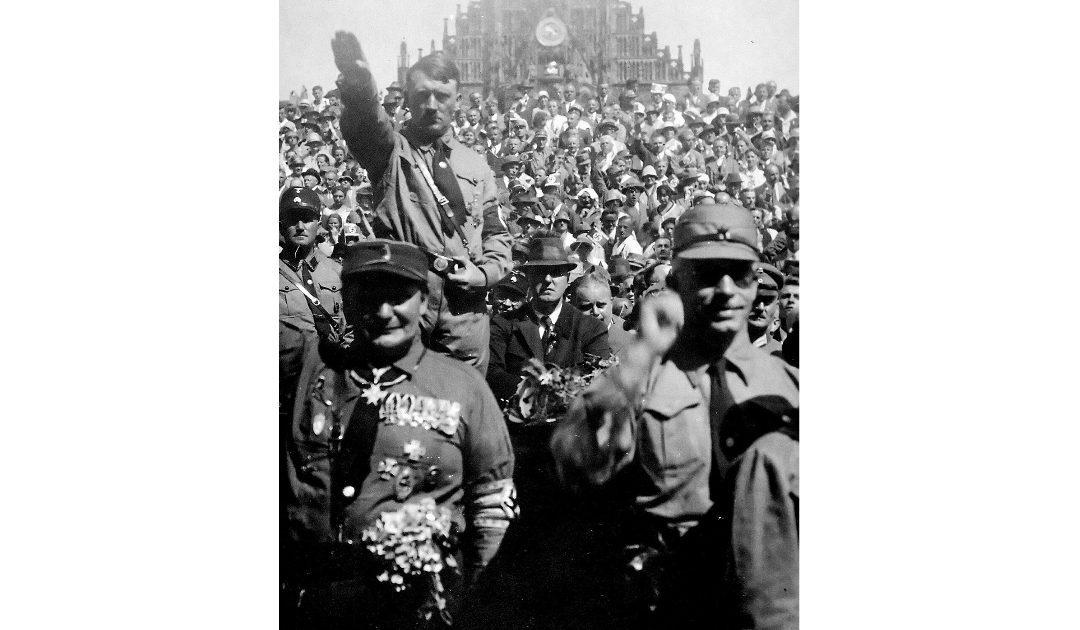
The Night of the Long Knives, which took place between the 30th of June and the 2nd of July, 1934, was a decisive and brutal purge carried out by Adolf Hitler to consolidate his power in Germany. Though often described as a single night, the violence extended over several days, during which leading figures within the Nazi movement and other perceived enemies were arrested and executed without trial.
By 1934, Hitler had been Chancellor of Germany for over a year, having come to power in January 1933. However, his hold on authority was not yet absolute. One of the main challenges came from within his own party, particularly from the leadership of the Sturmabteilung (SA), the Nazi Party’s paramilitary wing. The SA, numbering in the millions, had played a crucial role in Hitler’s rise by intimidating political opponents and projecting Nazi strength on the streets. Its leader, Ernst Röhm, was a long-time ally of Hitler but had ambitions that increasingly threatened the existing power structure.
Röhm wanted the SA to replace the regular German army, the Reichswehr, and to lead a “second revolution” that would push Nazi policy in a more radical, socially transformative direction. This alarmed both the conservative elites—industrialists, politicians, and military leaders—whose support Hitler needed, and Hitler himself, who depended on the army’s cooperation. The Reichswehr leadership, wary of the SA’s size and radicalism, demanded that Hitler curb Röhm’s influence.
At the same time, other figures in the Nazi hierarchy saw an opportunity to eliminate rivals. Heinrich Himmler and Hermann Göring, leaders of the Schutzstaffel (SS) and key Nazi institutions, worked to convince Hitler that Röhm was plotting a coup. Whether Röhm truly intended such a move remains debated, but the perception of a threat was enough.
On the 30th of June, 1934, Hitler personally initiated the purge. He flew to Munich and then to Bad Wiessee, where Röhm and other SA leaders were staying. In a dramatic show of force, Hitler and his entourage arrested Röhm and several of his associates. Across Germany, SS units and Gestapo agents began rounding up individuals on prepared lists.
The purge quickly extended beyond the SA leadership. Hitler used the opportunity to eliminate a range of political opponents and personal enemies. Among those killed was Gregor Strasser, a former Nazi leader who had broken with Hitler, and Kurt von Schleicher, who had previously served as Chancellor and was seen as a potential rival. Even individuals only loosely connected to alleged conspiracies were targeted.
Röhm himself was initially imprisoned. Hitler hesitated to have him killed outright, perhaps due to their long association. However, under pressure, he ultimately ordered Röhm’s execution. On the 1st of July, Röhm was shot in his cell after refusing to commit suicide.
The total number of victims remains uncertain, but it is generally estimated that at least 85 people were killed, with some historians suggesting the true number may have been much higher. The killings were carried out without legal process, marking a clear abandonment of the rule of law.
In the aftermath, Hitler moved quickly to justify his actions. On the 13th of July, 1934, he addressed the Reichstag, claiming that he had acted to prevent a treasonous plot and to protect the German state. He portrayed himself as the ultimate guardian of the nation, declaring that in moments of crisis, he was “the supreme judge of the German people.” The government retroactively legalised the killings, effectively placing Hitler above the law.
The consequences of the Night of the Long Knives were profound. The SA was effectively neutralised as a political force, its power broken and its membership reduced in influence. In contrast, the SS, under Himmler, emerged stronger and would go on to become one of the most powerful and feared organisations in Nazi Germany.
Crucially, the purge secured the loyalty of the German army. The Reichswehr leadership, relieved at the removal of Röhm and the SA threat, pledged its support to Hitler. This proved vital just weeks later, when President Paul von Hindenburg died in August 1934. Hitler merged the offices of Chancellor and President, becoming Führer, and the army swore an oath of personal allegiance to him.
The Night of the Long Knives marked a turning point in the consolidation of Nazi dictatorship. It demonstrated Hitler’s willingness to use violence against his own allies and confirmed that his regime would operate beyond legal and moral constraints. By eliminating internal dissent and securing key institutional support, Hitler strengthened his grip on Germany, paving the way for the totalitarian state that would lead Europe into catastrophe just a few years later.