
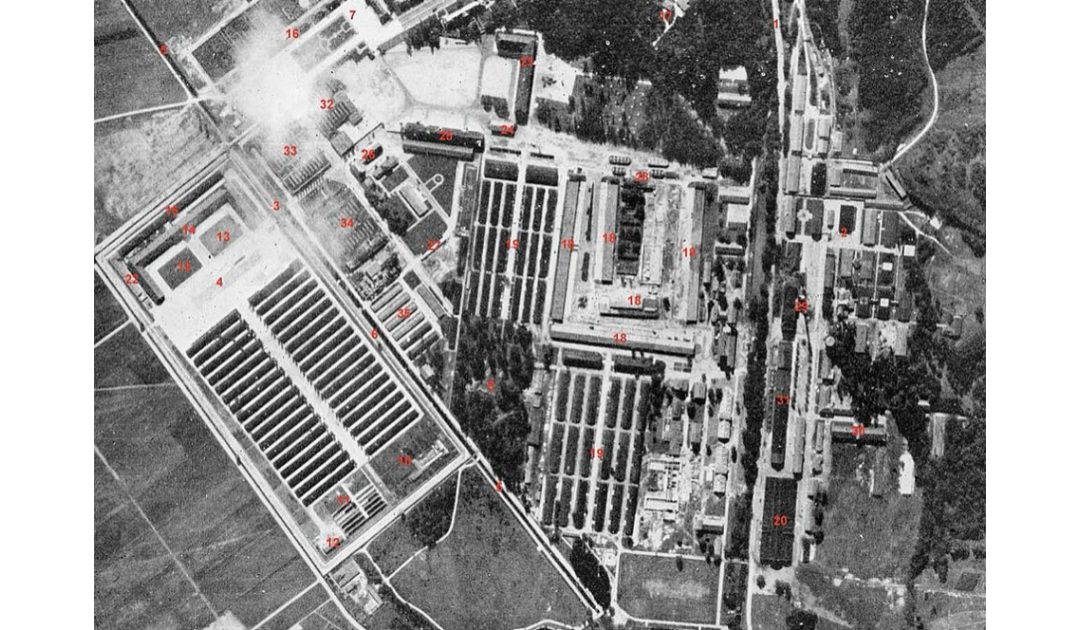
On the 22nd of March, 1933, Nazi Germany opened its first concentration camp at Dachau near Munich. It is the only concentration camp I have visited. When we visited Kraków last year, we decided against visiting Auschwitz. One concentration camp is enough. My father was amongst the first allied soldiers to arrive at Belsen. He had lots of war stories but he never wanted to talk about Belsen.
Dachau concentration camp, established in March 1933, was the first regular concentration camp set up by the Nazi regime and became the model for the entire camp system that followed. Located about 16 kilometres northwest of Munich, in Bavaria, it began as a facility for the detention of political opponents but evolved into a vast complex of imprisonment, forced labour, medical experimentation, and mass suffering that lasted until its liberation in April 1945.
The camp was opened only weeks after Adolf Hitler became Chancellor of Germany. On the 22nd of March, 1933, Heinrich Himmler, then police president of Munich and later head of the SS, announced the creation of the camp in the grounds of an abandoned gunpowder and munitions factory. Initially, Dachau was intended to hold around 5,000 prisoners, primarily communists, social democrats, trade unionists, and other political opponents of the Nazis. The early prisoners were German citizens arrested in the wave of repression that followed the Reichstag Fire in February 1933.
From the outset, Dachau served as a testing ground for the methods of terror and control that would later define the concentration camp system. The SS, under Theodor Eicke, who became commandant in June 1933, developed strict regulations, a brutal disciplinary regime, and a hierarchical structure among prisoners. Eicke’s organisational blueprint for Dachau became the template for other camps such as Buchenwald and Sachsenhausen. The camp’s motto, “Arbeit macht frei” (“Work sets you free”), later appeared at other camps and symbolised the cruel deception at the heart of the system.
As the Nazi regime consolidated power, the categories of prisoners at Dachau widened. By the mid-1930s, the camp also held Jehovah’s Witnesses, homosexual men, Roma and Sinti, and so-called “asocials,” a vague category that included vagrants and others deemed undesirable. After the Kristallnacht pogrom in November 1938, thousands of Jewish men were arrested and sent to Dachau, marking a significant expansion in the persecution of Jews through the camp system.
Although Dachau was not primarily an extermination camp like Auschwitz-Birkenau or Treblinka, it was a place of systematic cruelty, neglect, and death. Prisoners were subjected to hard labour, malnutrition, overcrowding, and frequent beatings. The camp expanded steadily, and by the outbreak of the Second World War it had already established a network of satellite camps. During the war, this network grew to include more than 140 subcamps across southern Germany and Austria, where prisoners were forced to work in armaments factories, construction projects, and other war-related industries.
Dachau also became notorious for medical experiments carried out on prisoners. SS doctors conducted tests related to high-altitude survival, freezing, malaria, and other conditions, often without anaesthesia and with lethal consequences. Prisoners were used as human subjects in the pursuit of military and pseudo-scientific research, reflecting the regime’s complete disregard for human life.
The prisoner population became increasingly international during the war. Resistance fighters, prisoners of war, and civilians from across occupied Europe were sent to Dachau. Poles, French, Yugoslavs, Soviets, and many others were imprisoned there. Catholic and Protestant clergy were also detained in large numbers; Dachau held a special “priests’ barracks,” and more than 2,500 clergymen were imprisoned, the majority of them Polish. This made Dachau unique among the camps for the concentration of religious prisoners.
Living conditions deteriorated severely as the war progressed. Overcrowding, disease, and starvation were rampant, particularly in the final years. Typhus epidemics swept through the camp. As Allied forces advanced in 1945, thousands of prisoners from evacuated camps in the east were sent to Dachau, further worsening conditions. Many died during these forced marches or shortly after arrival.
By the time U.S. forces approached Dachau in April 1945, the camp held more than 30,000 prisoners in desperate conditions. On the 29th of April, 1945, units of the U.S. 42nd and 45th Infantry Divisions liberated the camp. They encountered scenes of extreme deprivation: piles of corpses, emaciated survivors, and evidence of widespread disease. The liberation of Dachau became one of the most widely documented and shocking encounters between Allied soldiers and the reality of the concentration camp system.
In total, more than 200,000 prisoners passed through Dachau and its subcamps between 1933 and 1945. Estimates of the number who died there vary, but historians generally place the figure at over 40,000, due to starvation, disease, executions, medical experiments, and mistreatment.
After the war, Dachau served briefly as an internment camp for suspected Nazis before being used to house refugees and displaced persons. In the 1960s, efforts began to preserve the site as a memorial. The Dachau Concentration Camp Memorial Site was officially opened in 1965 and includes reconstructed barracks, the crematorium area, exhibitions, and memorials to the victims.