
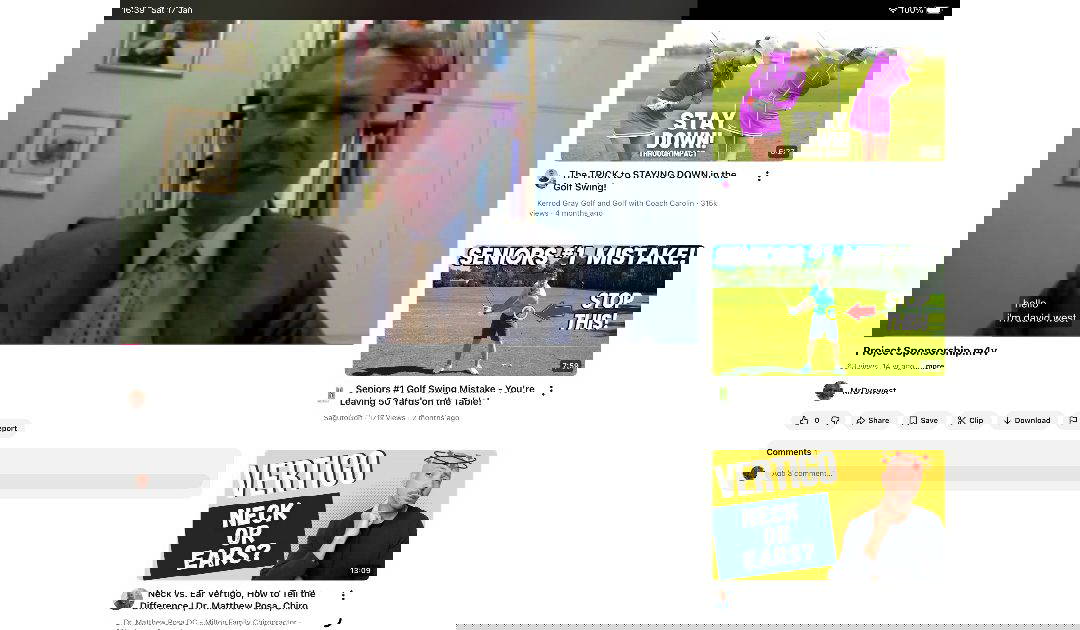
On the 14th of February, 2005, YouTube was launched. As you can see, I have never really got the hang of posting on YouTube, but I do seek a lot of help from it in improving my golf swing and technique.
YouTube is one of the defining cultural and technological platforms of the early twenty-first century, reshaping how people create, share, and consume video. Its origins were modest, but its growth has been rapid and transformative, altering entertainment, journalism, education, and even politics.
YouTube was founded by three former PayPal employees: Chad Hurley, Steve Chen, and Jawed Karim. The often-repeated origin story is that the founders struggled to share video clips of a dinner party or public events online, highlighting how cumbersome video sharing was at the time. While this anecdote may be partly apocryphal, it reflects a real problem: in the early 2000s, the internet was dominated by text and still images. Video files were large, slow to download, and required specialised software to play. Existing platforms were fragmented and unfriendly to casual users.
The breakthrough idea behind YouTube was simplicity. The site allowed users to upload videos easily, automatically converted them into a format that could be played in a web browser, and embedded a video player directly on the page. This removed technical barriers and made sharing videos as easy as sharing a link. The first video ever uploaded, Jawed Karim’s “Me at the zoo” in April 2005, was only 18 seconds long, but it embodied the platform’s ethos: ordinary people could publish content without gatekeepers.
YouTube’s growth was explosive. Within months, millions of videos were being viewed daily, and users began uploading everything from home movies and comedy sketches to music clips and political commentary. Crucially, YouTube embraced user-generated content at a time when traditional media companies still viewed the internet with suspicion. This openness helped create an ecosystem where amateurs could compete for attention alongside professionals.
In November 2006, just over a year after its public launch, YouTube was acquired by Google for $1.65 billion in stock. At the time, the price seemed astonishing for a company with little revenue and significant copyright challenges. Yet the acquisition proved pivotal. Google provided infrastructure to handle YouTube’s enormous bandwidth demands and integrated advertising technology that would eventually turn views into profit. Over time, YouTube developed monetisation systems that allowed creators to earn money through ads, transforming hobbyists into professionals and giving rise to the “YouTuber” as a new kind of career.
The late 2000s and early 2010s saw YouTube mature into a global platform. High-definition video, live streaming, and mobile apps expanded its reach, while recommendation algorithms increasingly shaped what users watched. YouTube became central to the rise of online influencers, gaming channels, beauty vloggers, and educational creators. Channels such as Khan Academy demonstrated that YouTube could be a serious educational resource, while others built vast audiences around personality and niche expertise.
At the same time, YouTube faced growing pains. Copyright disputes led to the development of Content ID, an automated system that detects copyrighted material. While this helped appease rights holders, it also sparked criticism from creators who felt unfairly penalised. Concerns over misinformation, extremist content, and the impact of recommendation algorithms intensified, particularly as YouTube became a major source of news for many users. Advertiser boycotts periodically forced the company to revise its policies and moderation practices.
Despite these controversies, YouTube’s cultural impact is undeniable. It has democratised video production, allowing voices outside traditional media to reach global audiences. It has changed how music is discovered, how children learn, how political movements organise, and how history is documented in real time. From viral videos and memes to long-form documentaries and podcasts, YouTube now hosts an extraordinary range of content.
Two decades after its founding, YouTube is no longer just a website but a vast ecosystem embedded in daily life. What began as a simple solution to sharing videos has become one of the most powerful media platforms in history, continually evolving as technology, culture, and society change around it.