
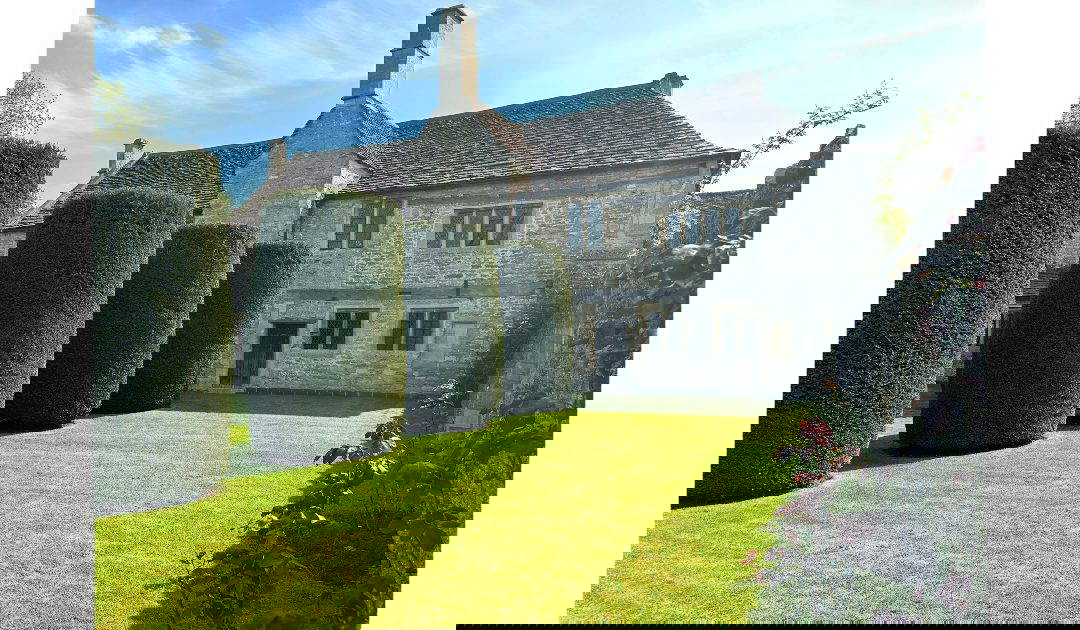
The National Trust was founded on the 12th of January, 1895. Claire and I are members of the National Trust as well as English Heritage. When we asked what the difference was, we were told that if it has a roof it’s probably National Trust. The photograph is of Westwood Manor, a local National Trust property.
The National Trust, officially known as the National Trust for Places of Historic Interest or Natural Beauty, is a conservation charity in the United Kingdom that has played a central role in preserving the country’s natural landscapes, historic buildings, and cultural heritage. Its history stretches back to the Victorian era, emerging from a growing public awareness of the importance of safeguarding both the natural environment and historic sites for the benefit of the nation.
The National Trust was founded in 1895 by three key figures: Octavia Hill, Sir Robert Hunter, and Canon Hardwicke Rawnsley. Hill was a social reformer with a profound commitment to improving living conditions for the urban poor and ensuring access to open spaces, believing that contact with nature was vital for physical and mental health. Hunter was a solicitor and legal expert on common land and rights of way, while Rawnsley was a clergyman and early conservationist deeply involved in protecting the Lake District. He graduated from the University of Oxford and considered a medical career before taking holy orders. Together, they envisioned a national organisation that could acquire and protect land, historic properties, and areas of significant natural beauty for the public.
The first property acquired by the National Trust was Dinas Oleu, a rugged stretch of cliff and hillside above Barmouth in Wales, gifted to the Trust in 1895 by Fanny Talbot. This symbolic act cemented the organisation’s founding mission: to hold land and property in perpetuity for public benefit. In its early decades, the Trust focused largely on rural landscapes, coastline, and open spaces, often stepping in to prevent development or destruction of areas of natural beauty. Its activity was closely aligned with the movement to protect Britain’s countryside at the turn of the twentieth century, as industrialisation and urban expansion threatened traditional landscapes.
By the early twentieth century, the Trust had begun to broaden its remit to include historic buildings and cultural heritage. The 1907 National Trust Act, passed by Parliament, gave the organisation legal powers to declare its properties inalienable, meaning they could never be sold or mortgaged, thus ensuring their long-term protection. The interwar years saw increasing public interest in preserving historic country houses, as many were under threat due to changing social and economic conditions. The decline of the landed aristocracy, combined with high maintenance costs and taxation, led to a wave of estates being sold or demolished. The Trust quietly became a lifeline for these properties, recognising their architectural, artistic, and historical significance.
During the mid-twentieth century, particularly after the Second World War, the National Trust expanded significantly. The 1937 Country Houses Scheme allowed owners of historic estates to transfer their properties to the Trust in lieu of death duties, while often continuing to live in part of the house. This arrangement preserved hundreds of stately homes, their collections, and surrounding landscapes. At the same time, the Trust’s work in the countryside increased, with large areas of coastline and upland regions being acquired to protect them from inappropriate development. Initiatives such as the Neptune Coastline Campaign, launched in 1965, were instrumental in safeguarding miles of unspoilt shorelines for future generations.
Public engagement has always been central to the Trust’s ethos. Membership, which began modestly in the nineteenth century, grew rapidly in the late twentieth and early twenty-first centuries, supported by a programme of education, volunteer opportunities, and visitor access. Today, properties ranging from medieval castles and Tudor manor houses to industrial heritage sites and wildlife reserves are open to the public, providing insight into Britain’s diverse history and environment.
The National Trust has also adapted to modern conservation challenges. In recent decades, its focus has expanded to encompass sustainability, biodiversity, and the impacts of climate change. Programmes have been implemented to support habitat restoration, wildlife corridors, and regenerative farming on Trust-owned land. Historic properties are managed with careful attention to environmental considerations, ensuring that heritage preservation aligns with ecological responsibility.
As of the twenty-first century, the National Trust has grown into one of the largest conservation charities in the world, with millions of members and an estate that includes over 500 historic properties, 250,000 hectares of land, and more than 780 miles of coastline. Its mission remains rooted in its founders’ vision: to protect and preserve the nation’s most treasured landscapes and buildings for the enjoyment and inspiration of future generations. The Trust’s history is not only a chronicle of preservation but also a reflection of the evolving relationship between the British public and their natural and cultural heritage, demonstrating the enduring value of stewardship in a changing world.