
I am spoilt for choice of events to write about for the 2nd of January. As a chartered civil engineer I really should go for the founding of the Institution of Civil Engineers in 1818. Then there is the Reconquista in 1492 when the last Moorish stronghold in Spain, the Emirate of Granada surrendered, but I’ve done that already. However I was intrigued by the Big Bottom Massacre. I also think Big Bottom might attract more google hits, even if they are disappointed.
The Big Bottom Massacre of 1791 was a violent episode during the early years of settlement in the Ohio Country, highlighting the tensions between Native American nations and the wave of European-American pioneers pushing westward after the American Revolution. It took place on the 2nd of January, 1791, along the Muskingum River in what is now Morgan County, Ohio, and is widely recognised as one of the first major attacks in that part of the Northwest Territory, setting the stage for increased hostilities during the Northwest Indian War.
In the late 1780s, settlers from the Ohio Company of Associates began to move into the territory north and west of the Ohio River. These lands had been ceded by Britain to the United States under the 1783 Treaty of Paris, but they were still home to a number of Native American nations, including the Wyandot, Shawnee, Delaware (Lenape), and Mingo. These nations did not recognise the legitimacy of the U.S. claims, as they had not been party to the treaty. Tensions grew as settlers built cabins, cleared land, and hunted extensively in areas the Native Americans relied upon for their own survival.
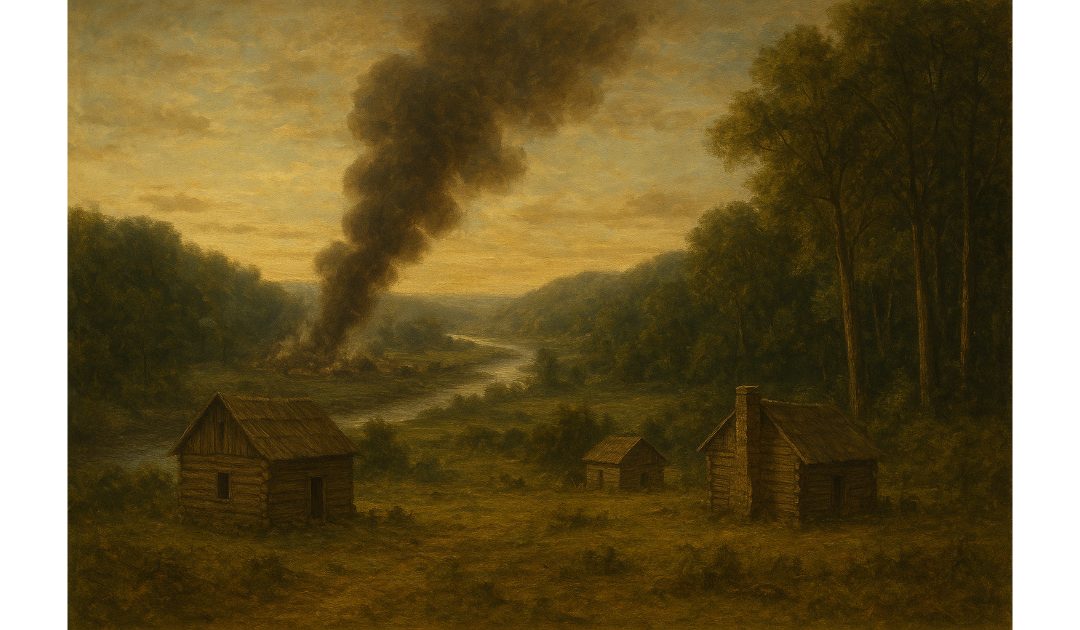
Big Bottom, a broad and fertile stretch of land along the Muskingum River, was chosen by a group of settlers in late 1790 as a promising site for a new community. They constructed a blockhouse and several cabins during the winter, but the settlement was poorly defended, with little coordination for security or understanding of the danger posed by the surrounding situation. Many of the men, women, and children in the settlement were newly arrived and inexperienced in frontier life.
On the evening of the 2nd of January, 1791, a force of approximately twenty-five Delaware and Wyandot warriors attacked the small settlement in a sudden and ferocious raid. The Native American party had been monitoring the settlers for some time, waiting for a moment of vulnerability. Snow on the ground and the isolation of the cabins worked to the attackers’ advantage. The warriors quickly surrounded the blockhouse and cabins, catching the inhabitants off-guard.
The initial assault was swift and devastating. Several settlers were killed immediately, while others were captured. Estimates vary, but most historical accounts suggest around eleven settlers were killed during the attack, including men, women, and children. A number of survivors were taken prisoner, to be later adopted into Native American communities or ransomed, a common practice during this period of frontier conflict. The attackers then burned the blockhouse and cabins, erasing the fledgling settlement from the landscape before retreating into the woods.
News of the Big Bottom Massacre spread rapidly across the Ohio settlements, causing widespread panic. Marietta, the main settlement of the Ohio Company, went on high alert, strengthening its fortifications and posting constant guards. The incident made clear that the frontier was highly volatile, and it demonstrated the willingness of Native American warriors to resist encroachment with direct and lethal force.
The massacre was a significant early event in the series of conflicts known as the Northwest Indian War (1785–1795). The war pitted a confederation of Native American nations, supported at times by British agents from forts in Canada, against U.S. forces attempting to secure the Northwest Territory for settlement. The attack on Big Bottom underscored the failure of the United States to adequately protect its settlers, and it fuelled calls for a more aggressive military campaign against the Native American confederacy.
In the aftermath, the Ohio Company took measures to ensure that new settlements were better defended, often with palisaded forts and organised militias. However, it would take several more years of fighting, including the disastrous defeat of U.S. forces at St. Clair’s Battle in late 1791, before the tide turned in the conflict. The Northwest Indian War ultimately concluded with the U.S. victory at the Battle of Fallen Timbers in 1794 and the Treaty of Greenville in 1795, which forced Native American nations to cede large portions of present-day Ohio.
Today, the Big Bottom Massacre is remembered as a stark example of the brutal and often tragic encounters that characterised the American frontier. It symbolises both the vulnerability of early settlers and the determination of Native Americans to defend their homelands against relentless westward expansion.